XGram is a noncustodial instant crypto exchange service aimed at users who want to swap one asset for another without opening a conventional trading account. It sits in the same broad category as services such as ChangeNOW, SimpleSwap, LetsExchange, and dozens of smaller quote based exchangers. The pitch is familiar, choose a pair, send funds to a generated address, and receive the destination asset. XGram's appeal is simplicity, but it is not a household name, and that matters more here than slick checkout design.
The service is built for conversion rather than trading. There is no order book to study, no portfolio tooling, no lending desk, and no meaningful reason to leave funds sitting with the provider. A user enters an amount, selects an output asset and address, then funds the transaction. That is a sensible model for a one off swap, especially for someone moving value between chains or replacing an asset without registering at a centralized exchange.
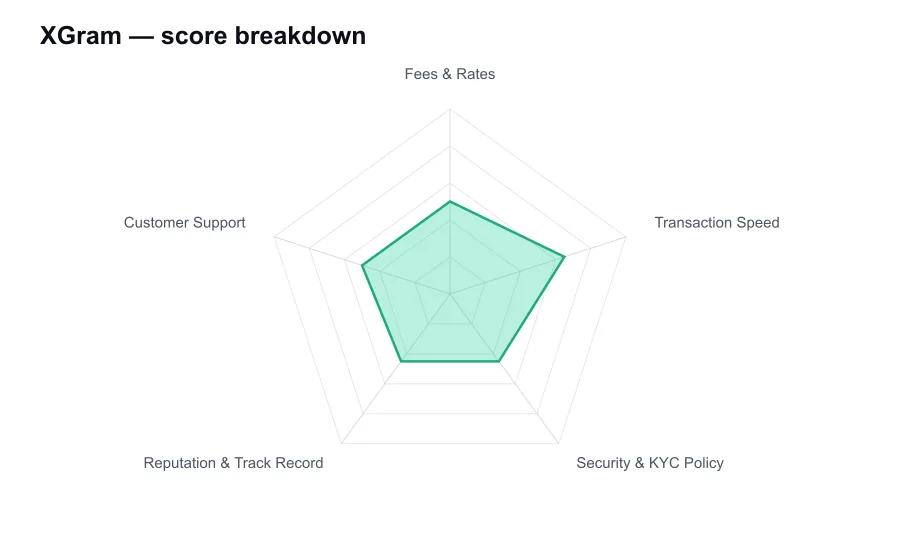
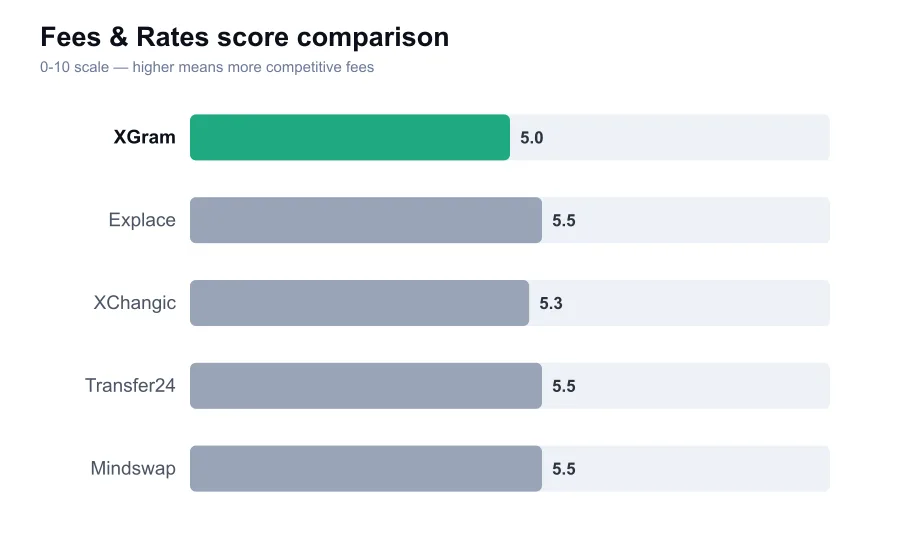
The first issue is pricing transparency. XGram presents a quoted conversion result rather than a plainly itemized platform commission plus network fee. That is standard among instant exchangers, but it makes comparison work harder than it should be. The effective cost is embedded in the exchange rate, spread, liquidity sourcing, and any miner fee treatment. You cannot look at a single advertised percentage and know what the trade really costs.
That does not mean every XGram quote is bad. For common, liquid pairs, the service can be convenient and competitive enough that the practical difference versus another instant exchanger is modest. The problem appears on smaller tokens, cross chain stablecoin swaps, and periods of sharp price movement. A quote that looks fine in dollar terms can be noticeably weaker than a major exchange's spot market once you compare the exact amount received. Serious users should price the same pair at two or three services before sending.
Fixed rate options deserve particular scrutiny. A fixed quote can be useful because it gives the sender a more predictable destination amount, but it is only useful if the deposit arrives within the stated payment window and the network behaves normally. A delayed Bitcoin transaction or an underpaid deposit can turn a straightforward exchange into a support case. Floating quotes are less rigid, though they expose the customer to market movement between creating the order and the provider executing it.
Speed is generally the reason someone would consider XGram. For liquid assets on fast networks, an ordinary swap can complete after the inbound transaction receives enough confirmations and liquidity is sourced. In practice, the blockchain is often the limiting factor. A token transfer on a congested network, an exchange withdrawal with its own review queue, or a low fee Bitcoin transaction can make a service that advertises instant conversion feel anything but instant.
XGram does not give a trader the control available on an order book exchange. You cannot usually choose the exact execution price, place a limit order, or wait for a preferred market level. You are accepting a convenience product. That can be perfectly rational for a modest urgent conversion, but it is a weak arrangement for a large trade where a one percent difference is meaningful. It is also a poor substitute for a regulated fiat on ramp or off ramp.
Its security model is better understood as transaction minimization rather than full platform security. The service does not require users to create a traditional custody account for an ordinary swap, which reduces the risk of a forgotten account being drained later. Yet noncustodial does not mean risk free. You still send assets to an address controlled by the service or its liquidity counterpart, and you depend on it to complete the outgoing leg correctly.
The KYC position should be read carefully. XGram may allow a normal transaction to start without mandatory identity verification, but that is not a promise that every transaction is anonymous or immune from review. Like many instant exchange providers, it can request information when an automated AML check flags a transfer, a source wallet, or a transaction pattern. Funds can then be paused while the issue is reviewed. Anyone who needs guaranteed permissionless execution should use an actual decentralized protocol, not assume a website based exchanger offers it.
This case by case verification approach is one of XGram's biggest practical weaknesses. It is understandable that a service must manage compliance exposure, but users deserve clear advance notice of what can trigger a hold and what evidence could be required. A vague AML clause gives the provider significant discretion after it has received the deposit. Never send money needed for an urgent bill, a liquidation deadline, or a time sensitive purchase through a service with discretionary review rights.
The public track record is limited compared with the established names in this sector. XGram has a web presence and a functioning exchange flow, but it has not accumulated the long, independently documented operating history that gives customers confidence in companies such as Kraken, Coinbase, or even the older instant swap brands. That does not prove misconduct. It does mean the burden is on the customer to keep transaction size sensible and verify the domain, wallet address, and quote before proceeding.
I would also be cautious about treating review widgets as conclusive evidence of reputation. Reviews can reveal repeated issues, especially about delays or support, but they rarely explain whether the customer sent an incorrect network, used an exchange withdrawal that arrived late, or encountered an AML review. Look for patterns rather than isolated complaints. A cluster of reports about changed payouts, unexplained verification, or unanswered tickets should carry more weight than a page of generic five star comments.
Support is available through the service's stated contact channels, but the experience is inherently harder to judge before a problem occurs. The meaningful test is not whether someone answers a simple pre sale message. It is whether the team can identify a deposit by transaction hash, explain confirmation requirements, and resolve a stalled payout without scripted replies. Keep the order ID, screenshot the quote, and save both transaction hashes. Those details are your evidence if the transfer needs intervention.
XGram is usable for a small or medium size swap by someone who understands the risks of quote based exchangers and checks the market first. Its checkout is more convenient than opening an exchange account for a one time conversion, but convenience is its main strength, not transparent pricing, deep public accountability, or institutional grade protections. I would use it only after comparing the final received amount with better known alternatives, and I would avoid treating it as a place to route a large or urgent transfer.