UAchanger is best understood as a regional online exchange service, aimed at moving money between cryptocurrencies, bank cards, electronic payment systems, and other locally relevant rails. It is not a global exchange in the mould of Binance, and it does not try to be one. Its appeal is practical conversion for people who need a particular payment direction completed with less ceremony than a full trading account.
That regional focus can be an advantage. Large exchanges often have broad crypto selection but weak support for smaller local payment methods. A specialist exchanger can make a difficult route straightforward, particularly for Ukrainian users or customers dealing with hryvnia-linked payment flows. The tradeoff is that the customer has to assess a smaller operator with fewer public disclosures and less institutional infrastructure.
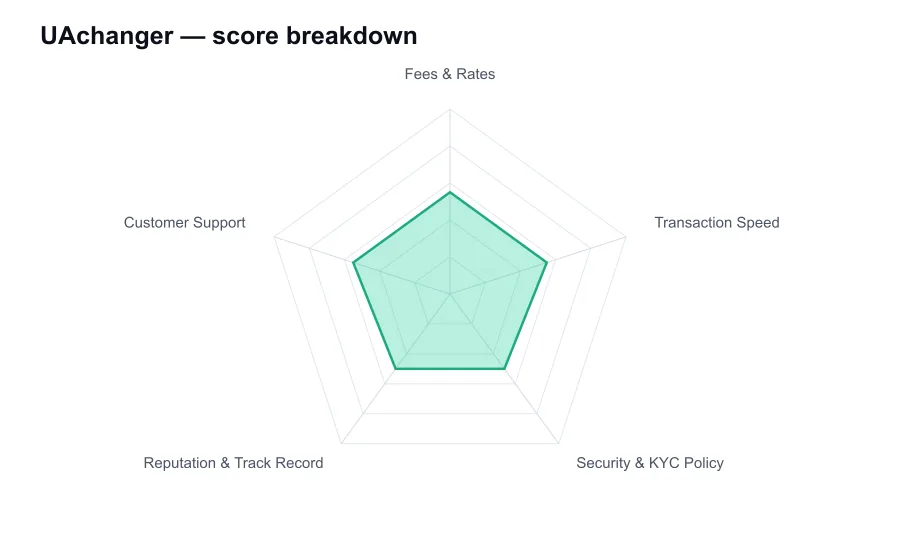
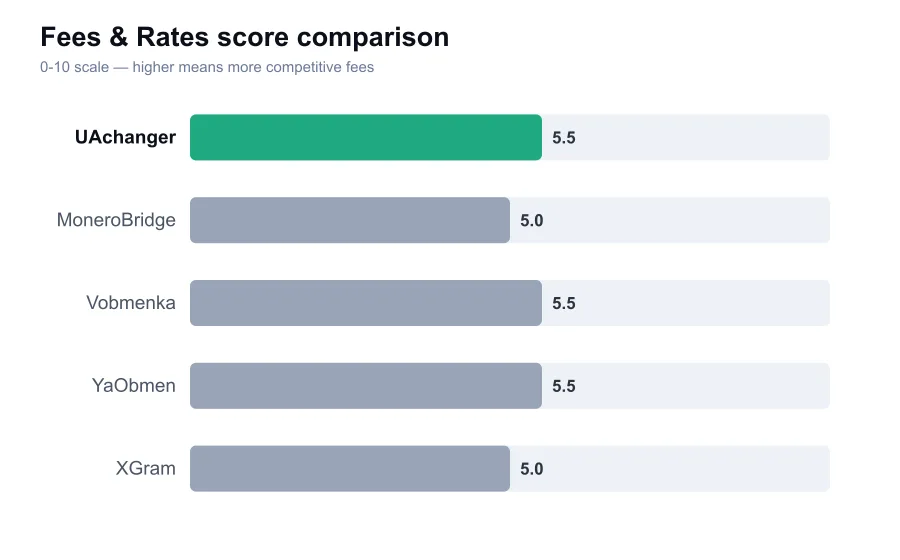
Pricing is quote-driven. The rate on the screen is normally a combined result of market pricing, the exchanger's margin, payment-provider costs, and any applicable network fee. That is normal in this sector, but it makes a simple advertised commission a poor guide to value. I would compare the final credited amount against at least two other exchangers before paying.
UAchanger can be attractive when it has liquidity for the precise direction you need. For ordinary crypto pairs, a large exchange or Trocador may often produce a sharper price because of deeper competition. For a niche bank-card or e-money route, direct comparison is the only honest answer. The winning provider can change throughout the day as reserves and payment demand change.
Customers should pay close attention to whether the quote is fixed or recalculated after receipt. A floating quote is exposed to price movement while a cryptocurrency deposit waits for confirmations. A bank transfer can introduce a different problem, because payment reconciliation may take longer than the customer expects. If the order is time-sensitive, ask support about the rate policy before sending funds.
Speed is similarly dependent on the route. Crypto transfers can move quickly if the sending transaction confirms promptly and the relevant reserve is available. Card and bank directions are more likely to require a human review or a delayed settlement window. A service that handles multiple financial rails cannot honestly promise every transaction in minutes.
The most common user mistake with exchangers like UAchanger is treating payment details casually. A wrong card number, an incorrect wallet network, a payment from someone else's bank account, or an amount that does not match the order can interrupt processing. Do not assume an operator can simply reverse every mistake. Blockchain transfers in particular are unforgiving.
UAchanger should not be used as a wallet or a savings account. Its role is to process a conversion, after which funds should land in your own account or self-custody wallet. Keeping assets at an exchange counter creates risk without providing any compensating benefit. This applies even if the service has completed previous orders without trouble.
The service's security proposition is operational rather than technical. A customer needs HTTPS, a genuine domain, secure support contact, and a clear order trail. What is missing compared with a regulated centralised exchange is deep public information about custody arrangements, audited financial controls, reserve proof, and formal complaint processes. That gap should affect transaction size.
KYC should be approached realistically. An exchanger may process many routine orders without a formal onboarding flow, but it can request documents if payment behaviour triggers fraud checks or legal compliance obligations. That possibility is particularly relevant for card and bank transfers. Users who need a firm no-KYC guarantee should not rely on assumptions from an old review or a promotional claim.
Reputation is adequate only if it can be verified in the present, not inferred from a polished website. Check current independent monitoring pages, recent user feedback, reserve indications, and whether complaints receive specific public responses. Review sites can be manipulated, so look for patterns such as repeated delays on one payment direction rather than relying on a star score.
Support is important because regional payment exchanges deal with exceptions more often than pure on-chain swaps. A real support team can reconcile a delayed transfer, request a missing payment reference, or explain why a payout is pending. Before placing a large order, send a basic pre-sale question. The clarity and speed of the reply tells you more than a marketing promise.
UAchanger makes sense for a small to medium conversion where its supported payment route is genuinely useful and its live payout is clearly competitive. It is a poor fit for active traders, institutional users, and people needing formal transaction reporting or strong regulatory recourse. Those customers should use a licensed exchange or bank-linked platform.
My view is measured rather than enthusiastic. UAchanger may solve a real regional payments problem, and that is valuable. Yet its category demands caution because pricing can be opaque, support matters enormously during exceptions, and public transparency is limited beside major brands. Test the route first, document every step, and do not allow convenience to turn into unnecessary counterparty exposure.