Transfer24 is a small online exchange service rather than a conventional crypto exchange. It sits in the part of the market where customers want to convert one payment method, e-currency balance, bank transfer, or cryptocurrency into another without opening a full trading account. That can be useful, especially in regions where local payment rails matter more than advanced charting tools. It is not a venue I would treat like Kraken, Coinbase, or Binance.
The service appears designed around manually processed exchange orders. That matters because the quoted rate is only one part of the cost. A customer may see a competitive headline rate, yet the effective result can change with network fees, bank charges, reserve availability, and the spread embedded in the conversion. Small exchangers often advertise a commission-free transaction while earning from that spread. Transfer24 should be judged on the final amount shown before payment, not on the word "fee" alone.
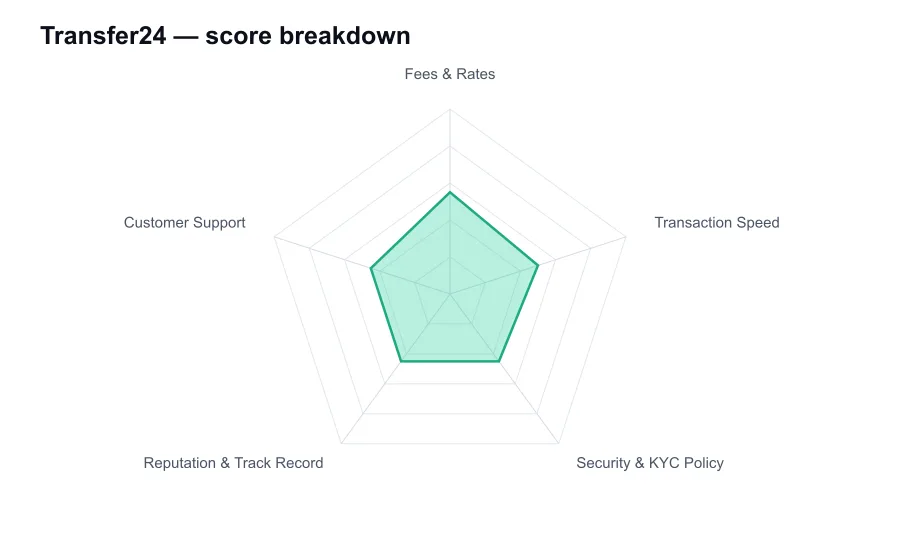
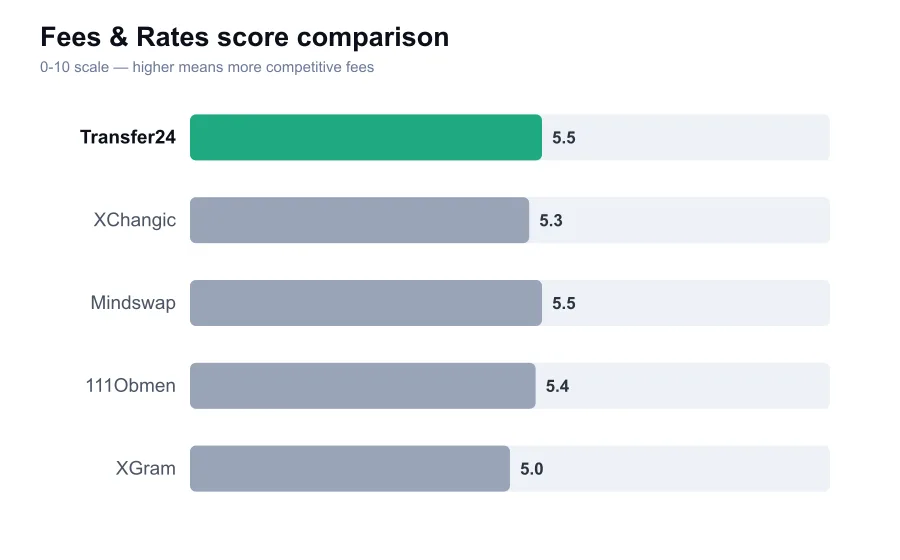
For mainstream crypto-to-crypto conversions, its pricing is hard to call exceptional without comparing a live quote against larger instant-swap services. Trocador, ChangeNOW, and SimpleSwap generally give users more partner quotes and a clearer sense of market competition. Transfer24 can still win on a particular pair, especially where a local payment method is involved, but that needs checking order by order.
I would be particularly cautious with small orders. A modest difference in rate can be overwhelmed by a fixed payment-provider charge or blockchain withdrawal fee. The right routine is simple: request a quote, calculate the amount you will actually receive, then compare it with at least two alternatives. If Transfer24's final amount is better, use it. If it is merely close, the larger provider with stronger support infrastructure is usually the safer choice.
Speed depends heavily on what is being exchanged. A blockchain deposit needs confirmations before an operator can release the outgoing funds. Bank and e-money transactions can also require manual verification. That means an order might finish quickly during staffed hours, but a customer should not assume the near-instant execution associated with a liquid automated exchange.
The operational model has a more important consequence than many users realize. A transaction that arrives with an incorrect payment reference, comes from a third-party account, or differs from the order amount can require human intervention. These are ordinary anti-fraud controls, but they become frustrating when a user expected an automated swap. Send exactly the amount requested and preserve every receipt until the exchange is complete.
Transfer24 does not have the public technical disclosures, deep liquidity evidence, or corporate transparency of a major regulated exchange. That does not make it fraudulent. It does mean that trust rests more heavily on the service's current operational behavior, independent monitoring listings, and its response when something goes wrong. A small provider has less room for error because one unresolved order can dominate a customer's experience.
The KYC position should be read carefully in the terms of service before depositing. Services of this kind may permit ordinary orders without routine identity checks, while reserving the right to request documents for suspicious activity, compliance screening, payment disputes, or unusually large transfers. "No registration" is not the same thing as a guaranteed no-document transaction. Anyone who cannot provide verification if requested should not send funds first.
I would not use Transfer24 as a place to store value. It is an exchange counter, not a wallet. Deposit only what the active order requires, wait for settlement, then move received crypto to a wallet you control. This is sensible with every instant exchanger, but especially with a smaller one whose reserves and internal custody arrangements are not publicly auditable.
Reputation is the weak point. Transfer24 has a much thinner public record than established international brands. A short review history can be enough for a low-value test transaction, but it does not establish how the business performs under stress, during a compliance dispute, or when network congestion affects outgoing payments. Years of visible, independently documented operations matter in this category.
Customer support is likely to be the deciding factor if an order stops moving. Before using the service, check whether there is a live contact method, whether a support ticket can be traced, and whether the site identifies the exchange operator. A support widget alone is not much comfort if there is no useful paper trail. Screenshots of the quote, payment confirmation, transaction hash, and order number are essential.
Transfer24 may make practical sense for a customer who has found a distinctly better quote on a specific payment pair and can afford to test it first. It is less persuasive for someone moving a large crypto balance, needing a guaranteed execution deadline, or requiring institutional compliance documentation. The service's niche is convenience, not maximum assurance.
My advice is conservative. Start with a small transaction, avoid sending from an account in somebody else's name, and do not split or alter the payment unless support tells you to. Confirm the target blockchain and token standard before paying. A cheap rate does not compensate for sending USDT on the wrong network.
Transfer24 is not automatically a bad choice, but it asks the customer to do more due diligence than a well-known exchange does. Its potential value is local-payment convenience and order-by-order pricing. Its limitations are limited public transparency, an uncertain support experience during exceptions, and a relatively light track record. For routine small conversions it can be workable, but I would keep meaningful sums with better-established providers.