XChangic is an instant-exchange style provider, meaning it is built for direct swaps and payment conversions rather than conventional trading. Its market position is practical but narrow. A customer arrives with one asset or payment method, accepts a quote, sends funds, and expects a payout. That can be faster than opening a full exchange account, but it carries a different set of risks.
The service should not be confused with a liquid centralized exchange. There is no reason to assume that the rate shown reflects a public order book or that large orders will receive institutional execution. XChangic is better understood as a counterparty that manages a conversion. The quote is the product, and the quality of the operation shows up when something does not go exactly as planned.
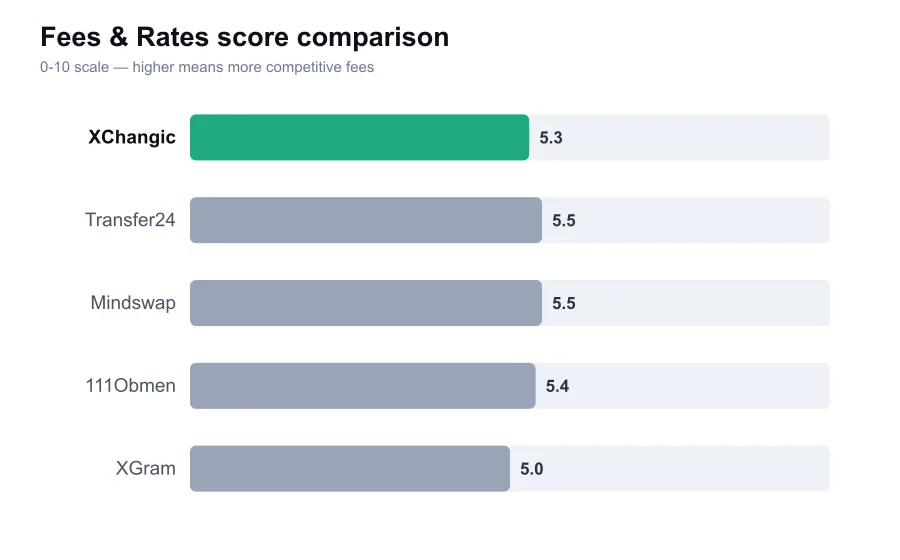
Fees are usually embedded in the rate at this type of provider. That does not make them unfair. It does mean a customer needs to compare the final receive amount, not search for a single percentage fee. A service can advertise low fees while still delivering a worse outcome through its exchange spread or a payout-side charge.
For ordinary crypto swaps, compare XChangic's result with at least one large exchange and one reputable instant-swap service. If you already hold the asset on a centralized exchange, trading there and withdrawing may be cheaper. XChangic becomes more compelling when it supports a route that would otherwise require several awkward steps or multiple accounts.
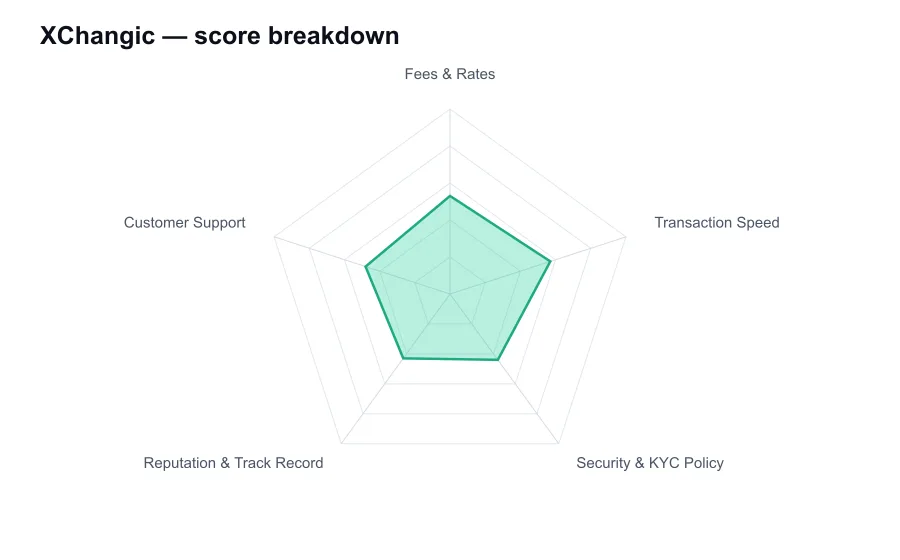
Speed can be very good on clean, small crypto orders. Once an inbound transaction has enough confirmations and the payout wallet is available, a direct exchange can complete quickly. That is the happy path. Card transfers, bank routes, unusual amounts, blockchain congestion, and compliance checks can all disrupt it.
A realistic user should treat any time estimate as a target, not a guarantee. The provider must see the incoming funds, reconcile them to an application, conduct any required screening, and send the outbound payment. A delay at any one point can matter if you are converting funds during a volatile market move.
XChangic's security profile is typical of a smaller instant exchanger. The most important protection is reducing how much trust you place in it. Do not use it as a wallet. Do not send extra funds beyond an order. Do not reuse old payment instructions. Create a fresh application and copy the destination details from that current order.
KYC can also be conditional. A user may see a simple exchange form and assume the service is entirely anonymous. That assumption is unsafe. Anti-money-laundering reviews, source-of-funds requests, and fraud screening can be triggered by transaction characteristics. If receiving funds quickly is critical, read the current AML policy before initiating the exchange.
Reputation is where XChangic falls behind better-known exchange brands. It does not have the wide public record, corporate disclosures, or regulatory visibility of major centralized exchanges. That doesn't mean every order will be problematic. It means the user has to put more weight on live evidence, such as clear terms, current contact routes, order documentation, and a small initial test.
Support should be measured before you need it. Send a concise question about a route, network, or payout timing and see whether the response is specific. If staff cannot explain how an order is identified, what happens after an AML review, or how a mistaken payment is handled, I would not proceed with a large transfer.
The best use case is a modest, clearly understood conversion where the final quote is attractive and the user can tolerate a delay. It is not the right place for treasury management, payroll, long-term savings, or an urgent large payment that has no margin for a compliance hold. Those jobs demand stronger disclosure and clearer recourse.
One further concern is user error. Instant exchangers receive many support requests caused by sending the wrong token, using the wrong chain, or paying from an account that does not match the order. XChangic users should regard the order page as a one-time instruction sheet, not something to skim while rushing through a transfer.
XChangic can perform a useful service, but it earns only a cautious recommendation. The category is inherently less transparent than a regulated brokerage or a large centralized exchange, and the provider's public profile does not erase that gap. Its value lies in convenience, not in a superior trust model.
My final take is simple. Use XChangic only when its particular route and net payout give you a clear reason to do so. Start small, document everything, and transfer the received assets to your own wallet or verified account promptly. If you want deep liquidity, robust disclosures, and strong escalation options, use a larger provider.