Explace is positioned as a crypto exchange and conversion service for users who want a quick route between digital assets without the heavier machinery of a major centralized platform. It belongs to the broad instant-exchange category, where the main attraction is convenience. A customer chooses a pair, sends a deposit, and expects an output asset at a personal wallet address.
The first challenge in reviewing Explace is its relatively limited public profile. It is not a brand with the long, widely documented operating history of Kraken, Coinbase, Bitstamp, or Binance. Nor does it have the level of public scrutiny that comes with being a major licensed exchange. That puts a ceiling on the confidence score before discussing the user interface or the quoted rate.
For the right person, the simplified exchange flow is appealing. There is no need to study maker and taker fees, manage an order book, or leave coins on a platform while waiting for a trade. That is useful for a wallet user who simply wants to convert USDT to BTC, ETH to SOL, or one network asset to another. It is not designed for active traders who need advanced orders, charting, or deep market data.
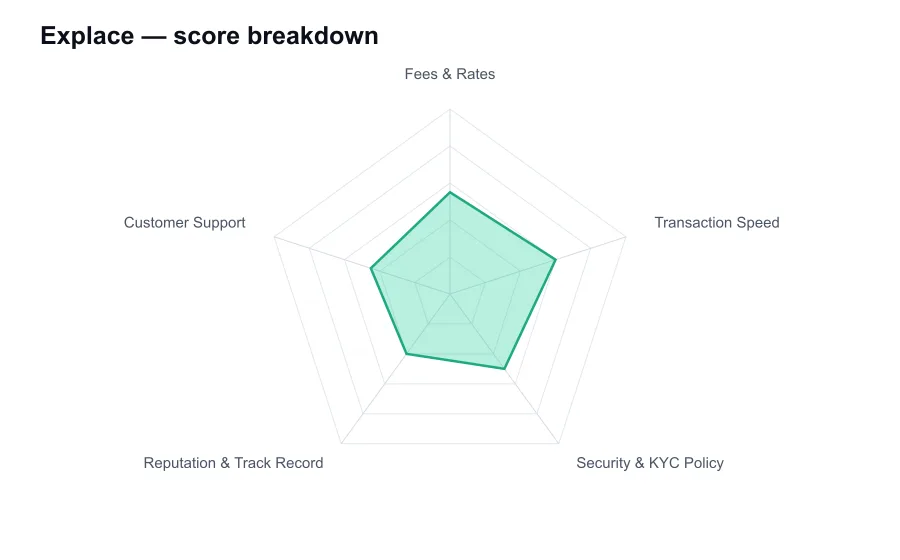
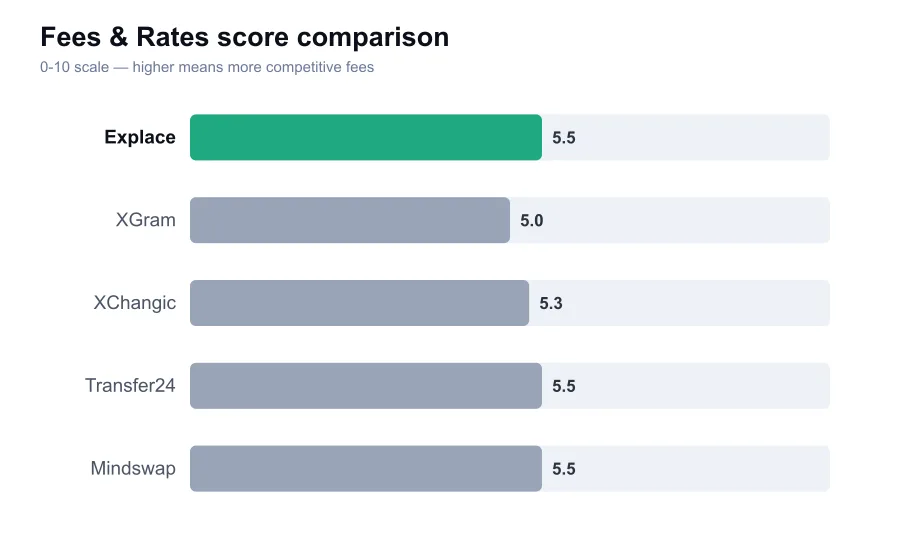
Fees should be approached through the final quote rather than broad marketing claims. Instant exchange services often combine a service charge, liquidity-provider pricing, and on-chain costs into the amount displayed. A customer can only make a fair comparison by entering the same amount and destination asset at Explace and at competing services. If the expected payout is worse, a simpler interface does not make up for it.
That point is especially important with stablecoins. Sending USDT can sound simple, but USDT exists on several networks with different fees, speeds, and wallet compatibility. An apparently attractive quote can become a problem if the recipient wallet only supports ERC-20 USDT while the selected route pays out TRC-20 USDT. Explace users need to treat the network selector as a financial decision, not a cosmetic setting.
Speed is likely to be satisfactory for simple, liquid pairs after the deposit confirms. The hard limit is the underlying chain. Fast networks can make an exchange feel nearly immediate, while Bitcoin deposits may require patience. A provider cannot complete a conversion before it can reliably credit the incoming funds. Any site that implies otherwise deserves skepticism.
Explace's wallet-to-wallet approach means users do not have to maintain an exchange balance. That reduces the temptation to leave funds sitting under a provider's control. It also makes address accuracy crucial. Once a payout has been sent to the wallet entered at order creation, reversing an error is generally impossible. The lack of a standing account does not protect a user from an incorrect address.
Security information is a weaker area than usability. Smaller exchange services rarely publish the detailed custody, penetration-testing, insurance, reserve, and governance information expected from major regulated venues. Explace should therefore be evaluated as a transaction service, not as a place to store wealth. A user can reduce risk by keeping the swap limited to the amount needed and by sending output directly to a wallet they control.
KYC policies in this part of the market often work on a conditional basis. A transaction may begin without account registration, while unusual behavior, compliance screening, or a liquidity-provider alert can lead to requests for additional information. That possibility is important for anyone moving funds on a deadline. No-account access should never be read as an assurance that an exchange cannot be paused.
Reputation is where Explace falls behind more established names. There is not enough broad, independently verifiable evidence to give it a strong score. This does not mean every order will fail, nor is it fair to infer bad faith from a small footprint alone. It does mean reviews should be read carefully for details, dates, and evidence rather than relying on generic five-star comments.
Support quality is difficult to establish before something goes wrong. For a straightforward completed order, most instant exchangers look equally competent. The useful measure is whether support can handle a delayed deposit, a missing tag, a network mismatch, or a compliance hold. Explace may provide contact channels, but its public record does not yet justify assuming the depth of support available at a mature exchange.
I would approach a first Explace transaction as a controlled test. Select a major asset pair, use a small amount, avoid a deadline-sensitive payment, and save every relevant identifier. If the order completes properly, that gives the user direct evidence about the service. It still does not turn a successful ten-dollar swap into proof that the platform can safely handle a five-figure transfer.
Explace may have a place for experienced crypto users who understand wallets, confirmations, and chain selection. Beginners are more exposed because they may not recognize the difference between token versions or understand why an exchange rate changed after a delayed deposit. A conventional exchange can be less private and more cumbersome, but it often provides clearer transaction records, account recovery, and regulated customer protections.
My final view is cautious rather than dismissive. Explace's basic model is useful, and wallet-to-wallet conversion is a legitimate need. The missing ingredient is a public track record strong enough to make it a default recommendation. Use it only for modest, non-urgent exchanges after comparing the final quote, and look to established providers for larger sums, fiat transactions, or anything that needs a dependable escalation path.