WxMoney is a small exchange-style service aimed at direct conversions rather than active market trading. That distinction sets expectations. You are not getting the deep liquidity, extensive compliance documentation, or broad product suite of a centralized exchange. You are getting a quoted exchange route, a payment instruction, and a payout once the operator or its systems process the order.
Services in this category can be handy where they support a narrow payment combination that a larger platform does not handle well. They can also be less intimidating than a professional trading terminal. The convenience has a cost, though. You need to assess the provider, rate, and transfer instructions yourself because the protections are usually thinner.
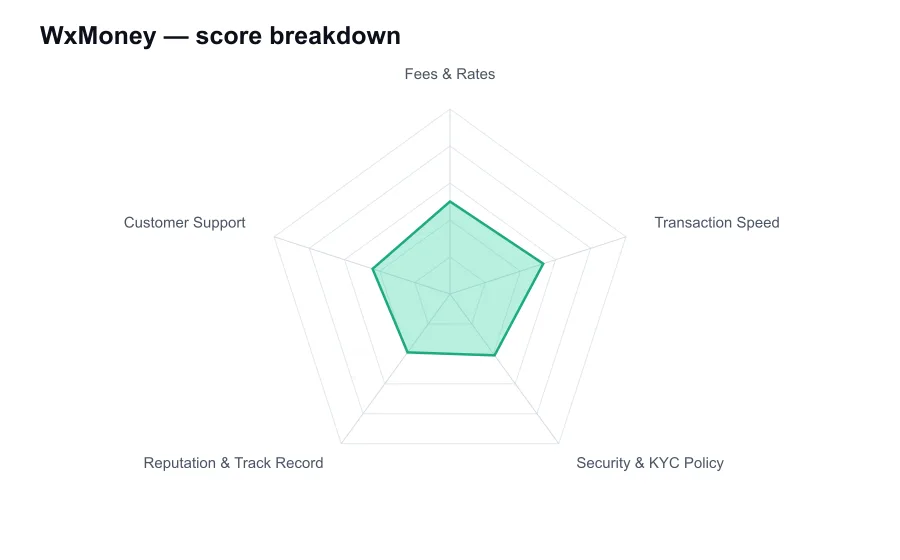
WxMoney is not a provider I would rank beside established names such as Kraken, Coinbase, Bitstamp, or WhiteBIT for corporate transparency and public track record. A smaller web exchanger may operate perfectly well, but limited independent reporting means there is less evidence for a customer to rely on if an order becomes disputed.
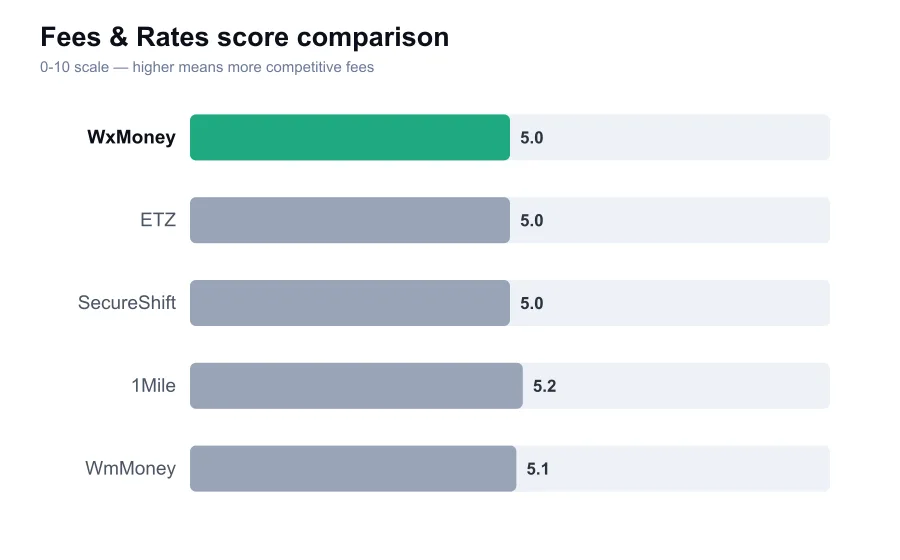
The fee question is more complicated than it looks. A quoted rate can contain the operator's profit margin, payment-processing expense, reserve-management cost, and market movement allowance. That is normal for an instant exchange service. It becomes a problem when users see a nominally low fee and fail to compare the actual payout against other live offers.
Check the rate at the moment you create the application, then read whether it is fixed or floating. Fixed-rate orders often require payment within a short stated window. Floating-rate orders may settle at the provider's applicable rate after funds arrive. Those two models produce very different outcomes during a sharp market move.
Transaction speed is likely to vary materially by route. Crypto-to-crypto transfers can be quick if the inbound transaction confirms promptly and the payout wallet is funded. Transfers involving bank cards, electronic money, or manual verification can take longer. A network's confirmation time is only one part of the process, and users routinely underestimate the rest.
The most common avoidable mistake is using the wrong network or destination details. If a token exists on several chains, a low-fee route may be tempting, but it only works if both sides support that exact chain. Never assume that a provider can recover an asset sent over an unsupported network. Ask first if the instructions are unclear.
Security is weaker here in the sense that the user has fewer institutional safeguards, not necessarily because the website is technically unsafe. Your funds are exposed to an operator while the order is being completed. That makes it unwise to preload an account, keep a stored balance, or send an amount you cannot afford to have delayed while a review is resolved.
KYC should be approached realistically. A site may permit a basic order flow without account verification, but anti-fraud and AML checks can still affect transactions. If payment details do not match, if the sender is a third party, or if the transaction triggers screening, the operator may pause it and ask questions. Read the terms before relying on urgency.
Customer support becomes the real test of a small exchanger. A support agent should be able to identify an order from its reference number, explain its status, and tell you what evidence is needed. If you cannot get a clear response before paying, do not expect a better one after an issue occurs.
WxMoney might still be a reasonable tool for a knowledgeable user who sees a clearly superior live quote on a familiar route. The key word is knowledgeable. That user knows how to check a wallet address, calculate the effective price, understand confirmation requirements, and document payment. A beginner should not be learning those lessons with a high-value transfer.
Compared with a major exchange, WxMoney loses heavily on reputation, transparency, and the ability to escalate a problem. It can win on convenience for a particular payment pair. That is a narrow advantage, and it should be judged each time instead of assumed from a previous successful order.
I would not describe WxMoney as a destination for portfolio management or regular trading. It is a utility service. Use it only if its specific route, payout, and stated conditions are better than the alternatives available to you at that moment. Anything else is taking extra counterparty risk for no clear benefit.
My recommendation is therefore restrained. Test the process with a small amount, use only details copied from the current order page, and withdraw immediately to your own account or wallet. If you value predictable support, disclosed business information, and stronger customer protections, pay a little more and use a better-established provider.