1WM is a smaller instant exchange provider rather than a full-service crypto exchange. Its purpose is to facilitate a particular conversion, often between cryptocurrency and payment methods, without asking the customer to learn an order-book interface. That can be useful, but it places the service in a category where operational trust matters more than branding.
The customer experience of an instant exchanger is usually direct. You choose what you send, choose what you receive, provide destination details, and pay into the order. The operator or its automated systems then complete the other side. It is a practical model for a one-off conversion. It is not a model that offers the protections of keeping assets in your own wallet or using a large regulated exchange with defined account procedures.
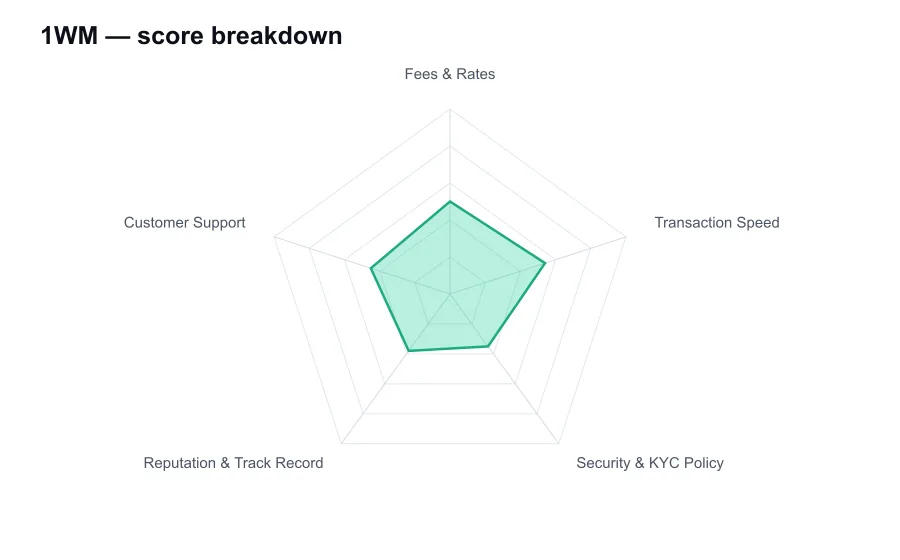
The public information available for independent assessment appears limited. I could not verify a comprehensive corporate profile, a clear and independently documented founding history, security audits, proof-of-reserves reporting, or a substantial record of third-party financial scrutiny. That absence is the central fact of this review. A provider can work properly and still be hard to recommend confidently without those signals.
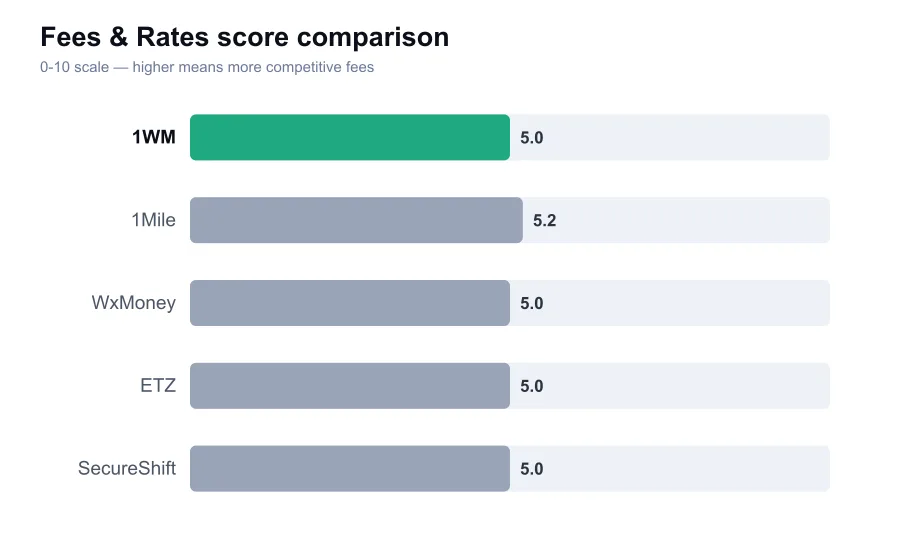
Pricing should be approached as an all-in quote. Small exchangers often earn through the spread between the market rate and the rate delivered to the customer, plus costs associated with blockchain settlement or payment channels. There is nothing unusual about that model. The problem is that it gives the customer less ability to predict costs from a published schedule.
A rate may look excellent until the order amount is entered, or until the customer notices that the receiving side carries a separate network fee. Compare final outputs across several providers. If the difference is small, I would usually prefer the provider with stronger transparency and a better-established support record. Saving a fraction of a percent is not compelling if the transaction could become difficult to trace or resolve.
Speed is influenced by more than the provider's own systems. Bitcoin transfers may need several confirmations. Stablecoin transfers can be fast on a low-cost network but still require risk screening. Bank cards and local payment rails may have fraud controls, cutoff times, and weekend limitations. A service that promises a quick exchange should be judged against the completed order time, not an optimistic timer shown before payment.
The main operational issue is the point at which an order moves from automatic processing to manual handling. A wrong amount, delayed payment, unsupported token contract, missing memo, or blockchain reorganization can all cause that. In a conventional exchange account, there may be internal logs and account tools to help. With an exchanger, the user is dependent on the operator's response and the evidence retained from the order.
1WM's security score is therefore constrained by limited verifiable disclosure, not by an allegation of wrongdoing. Customers should assume that any off-chain exchange creates counterparty exposure for the period between sending funds and receiving the payout. If the service says an order does not require KYC, read that as a description of the ordinary path, not a promise that risk controls cannot interrupt the transaction.
Verification requests are an uncomfortable subject, but they are part of the reality of crypto payment processing. A provider can be pressured to investigate a suspicious transfer, and a bank or payment processor may block a related payment independently. If you require certainty, choose a service with published verification tiers and documented handling rules. If you use an instant exchanger, keep the transaction simple and use funds from accounts you control.
Reputation should be built from evidence, not from a few favorable comments. Monitoring-site feedback and repeat customer reports can be helpful for identifying obvious failures, but they do not show how a provider manages a serious dispute or a security incident. I would look for consistency in reviews, an identifiable official domain, clear terms, and support responses that address specific questions without evasive language.
Support is the category that can rescue or ruin a small exchange. A human operator who quickly identifies a payment reference problem can make a delay manageable. Silence, generic replies, or instructions to send funds outside the formal order route are red flags. Before using 1WM, find its official support contact through the site itself, not a search-ad result or an unsolicited social-media message.
There is no compelling reason to make 1WM your first stop for a large crypto conversion. Large platforms may require more onboarding, but their operational history, liquidity, and support tooling are usually stronger. A small exchanger is more defensible where it serves a narrow local route and where the customer has tested it successfully with a modest transaction.
For users who understand blockchain finality and payment references, 1WM may be a workable utility for an occasional conversion. For inexperienced users, the lack of a robust account environment can make even a simple mistake expensive. Someone who needs tax reports, recurring trading, staking, derivatives, or custody should look elsewhere because this is not that kind of service.
My conclusion is straightforward: treat 1WM as a potentially useful transaction counterparty, not a financial institution. Its convenience is real if it supports the exact route you need, yet the limited public evidence around security and corporate track record calls for restraint. Compare the final quote, test with a small amount, and preserve the paperwork. If a better-known provider is close in price, I would choose the better-known provider.