SecureShift is a relatively small non-custodial instant exchange service. It sits in the same broad category as SimpleSwap, ChangeNOW and StealthEX: users select a pair, send coins to a generated address, and receive another asset without opening a trading account. That model is convenient, but SecureShift has a basic problem that established rivals do not. Its public track record is thin, and there is not enough independently verifiable operational history to put it in the same trust bracket as the larger names.
The service presents itself as an exchange aggregator rather than a venue operating an order book. In practice, that means SecureShift may source liquidity through third parties and route a swap through one or more counterparties. This is normal for instant exchangers. It also means the quoted rate is only as dependable as the liquidity partner, market conditions and network state at the moment the order is processed.
The interface is straightforward. Pick the asset to send, choose the receiving asset, enter a destination address and confirm the order. For a user who already understands self-custody, that is a pleasantly short path. There is no charting suite, no advanced order type and no account dashboard that invites users to leave coins sitting on the platform. For simple one-off conversions, that restraint is sensible.
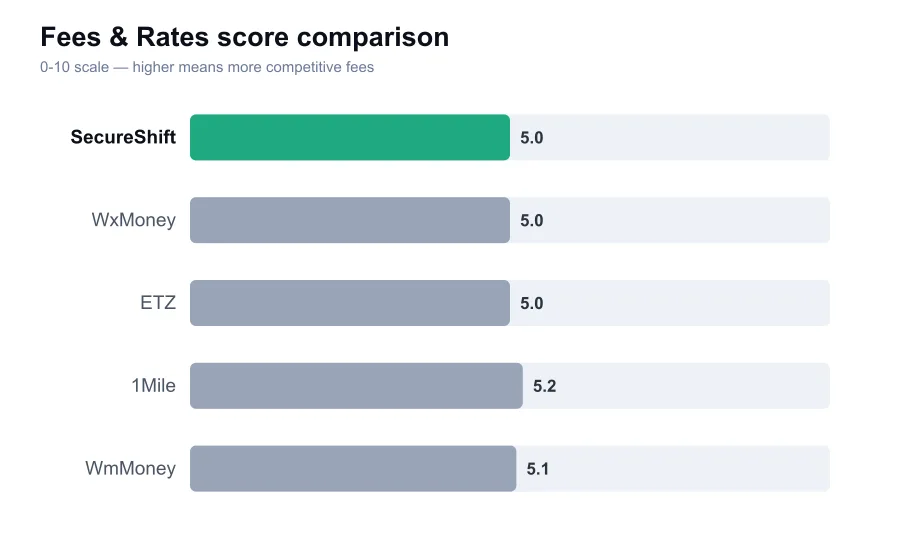
Fees are where SecureShift is difficult to judge confidently. The site displays exchange estimates rather than a clear, durable public schedule with a stated flat service fee. That is common in this sector, but it is not good enough for a reviewer to call the pricing competitive without qualification. The spread, network fee and any liquidity-provider charge can be embedded in the rate you see. A quote may look attractive until you compare the exact output against a direct swap or another instant-exchange quote.
I would treat every SecureShift rate as a live offer, not as evidence of a low-fee service. Check the amount received against at least two competitors before sending. This matters most for BTC, ETH and stablecoin swaps, where a difference of even a fraction of a percent can outweigh the convenience of completing the exchange in one screen. Small trades can be especially poor value because network fees have a larger effect on the final amount.
Speed depends primarily on confirmations and liquidity routing. A swap funded with a fast chain can finish quickly after the required deposit confirmations. Bitcoin deposits, congested Ethereum transactions and swaps that require a partner to rebalance can take considerably longer. SecureShift does not have the depth of published operational data, status reporting or established support documentation that would let a customer predict completion times with much confidence.
That uncertainty is more important than a marketing claim about fast exchanges. Instant exchange does not mean instantaneous settlement. The customer has to wait for the incoming transaction, any compliance screening, a conversion at a supplier and an outbound transaction. If you need a coin for an arbitrage trade or an urgent payment, use a route with transparent status tools and a history of reliable execution, or avoid an intermediary entirely.
The non-custodial label also needs careful interpretation. SecureShift does not operate like a custodial exchange account where assets are held indefinitely, but it does take temporary control of the deposit during the swap. That is still counterparty exposure. If an order is delayed, misquoted, screened, or sent on the wrong network, the user cannot simply reverse the blockchain transaction.
The platform advertises a no-registration experience, but no-registration should never be mistaken for a promise that identity checks can never happen. Like other instant exchangers, SecureShift can be exposed to anti-money-laundering requests from liquidity providers, blockchain analytics flags, or legal obligations. A transaction can be paused while the operator asks for source-of-funds or identification material. The relevant question is whether that process is explained clearly and handled consistently. Public evidence is limited.
Security communications are another weak point. I found little in the way of extensive third-party security reporting, public incident analysis, named corporate leadership or long-running independent coverage. A small provider is not automatically unsafe, and there are legitimate teams that prefer a low profile. Yet crypto users should demand more evidence before trusting a new or obscure routing service with meaningful funds.
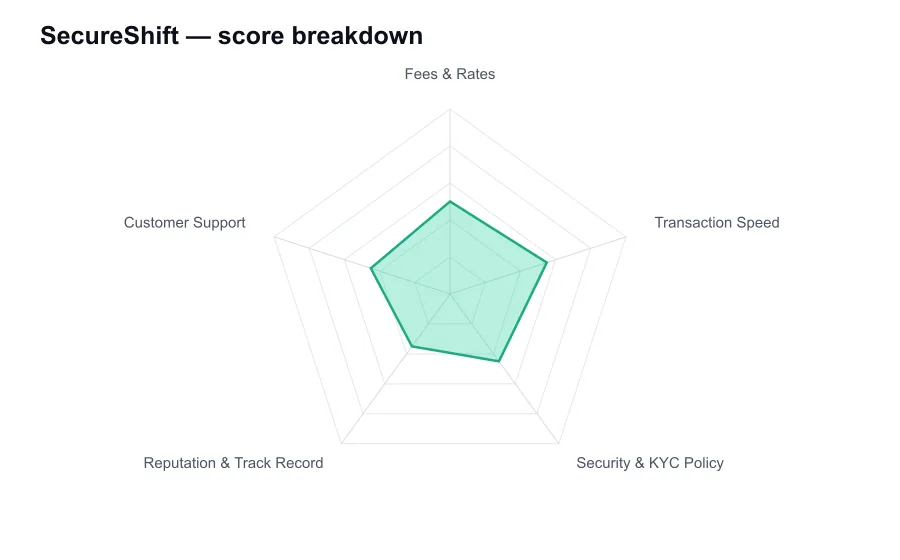
Reputation therefore has to carry a modest score. SecureShift does not have the years of customer history attached to SimpleSwap, nor the much larger review footprint accumulated by StealthEX. There also is no well-known open-source protocol, governance structure or public audit trail comparable to Spark. It may work perfectly well for a small test transaction, but it has not earned the benefit of the doubt for large transfers.
Customer support appears to be a central dependency for anyone whose swap goes wrong. With a smaller service, response quality can vary dramatically. Before using it, look for a real support channel, save the order ID and transaction hash, and make sure the service has a reachable contact method. A generic form without a clear service commitment is not much comfort after funds have already left your wallet.
There is a practical way to use SecureShift without taking unnecessary risk. Start with a small amount, use a common asset pair, verify the network on both sides and wait for the first swap to settle before increasing size. Never send a token to a deposit address for a different chain merely because the ticker looks familiar. USDT and USDC mistakes remain among the most expensive errors users make on instant exchange sites.
My view is cautious rather than hostile. SecureShift offers the familiar convenience of a no-account swap interface, but convenience is the least difficult part of this business. Clear pricing, established support, transparent operations and an independently visible reputation are the hard parts, and this service has not yet supplied enough evidence to rate highly on them. It is a plausible option for a small experimental conversion, not a first-choice venue for a substantial portfolio move.