Ripio is one of Latin America's older crypto platforms, built around the practical needs of users in Argentina, Brazil, Uruguay, Colombia, and other Spanish and Portuguese speaking markets. It began as a Bitcoin service in 2013 and grew into a broader app for buying, selling, holding, and transferring crypto. Its appeal is not sophisticated global trading. It is local access, familiar payment rails, and a product designed for regions where inflation and capital restrictions make digital dollars especially relevant.
That context is essential to judging Ripio fairly. Comparing it only with Binance or Coinbase misses the point. Many Ripio customers want to convert local currency into USDC, USDT, Bitcoin, or Ether without wiring money abroad or figuring out a foreign exchange interface. Ripio has spent years building local operational knowledge, and that is a genuine advantage in markets where banking connections can be more valuable than a vast token list.
The app is approachable. A new user can fund an account through locally available methods, buy a supported asset, and withdraw to a personal wallet without confronting chart-heavy screens. The design will suit someone making periodic purchases far better than an active trader. More demanding users may find it restrictive, especially compared with platforms offering deep order books, derivatives, automated orders, or an extensive API.
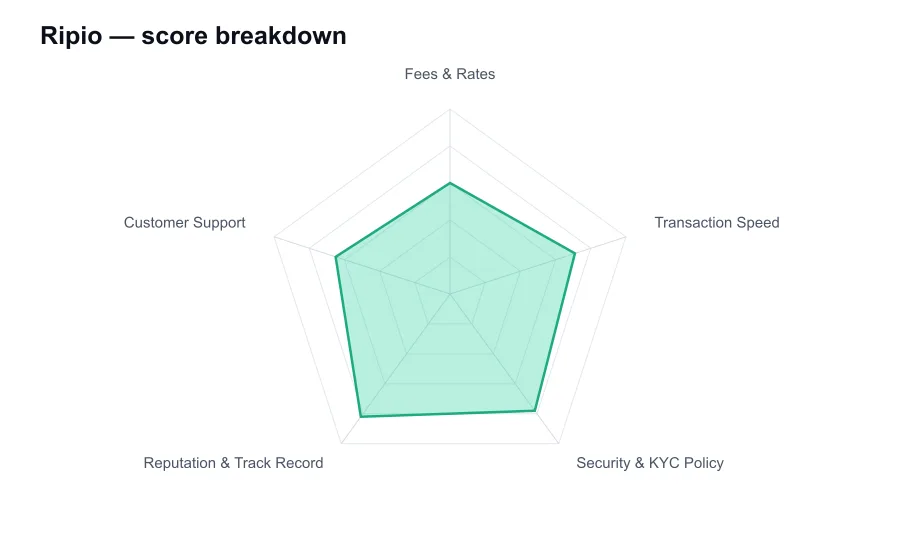
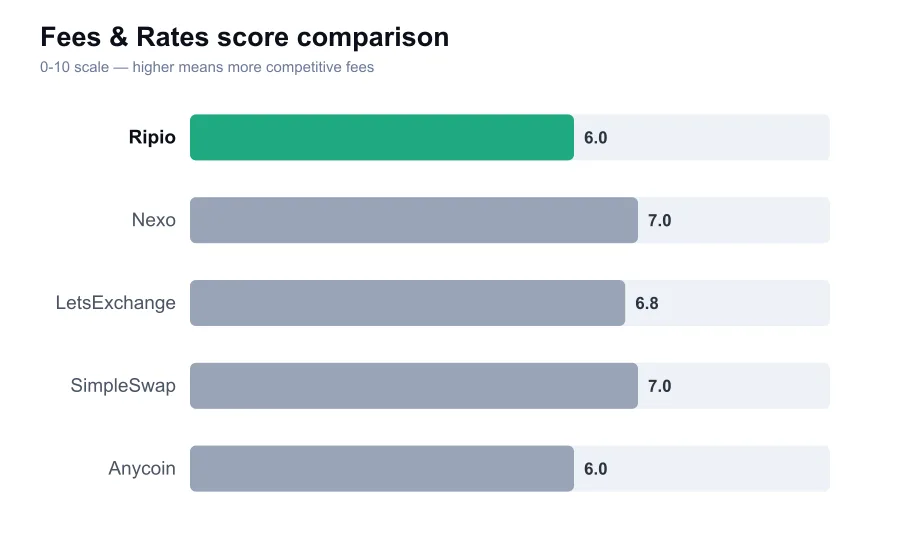
Fees are the part that requires the closest attention. Ripio's customer-facing cost can include trading charges, spread in the quoted price, and separate charges from payment providers or blockchain withdrawals. That does not make it unusually expensive by Latin American retail standards, but it can make headline comparisons misleading. A simple buy screen is convenient, yet its price may be less favorable than placing an order on a high-liquidity exchange.
For small purchases, convenience often matters more than a few basis points. For regular purchases or larger conversions, it pays to compare Ripio's final quote with Mercado Bitcoin, Bitso, Lemon, or Binance where those alternatives are available. Stablecoin purchases deserve particular care. A small percentage difference on a dollar-linked asset might look harmless once, but it becomes meaningful for users who convert savings every month.
Transaction speed depends heavily on the funding method. Crypto-to-crypto transfers can move at the pace of their underlying chains. Fiat deposits and withdrawals depend on local banking rails and can be subject to bank processing times, cutoffs, and compliance checks. Ripio is usually fast enough for retail use, but it is not the venue for someone trying to execute a large position within seconds of a market move.
The security model is much closer to that of a conventional regulated financial app than to a no-KYC crypto service. Identity verification is required for normal use, with information requirements that can increase according to local rules and account activity. Some crypto users will dislike that. For Ripio's core audience, it is part of the trade: access to fiat rails and a recognizable company requires a verified customer relationship.
Users should still enable every available account protection setting and should not assume an established brand eliminates risk. Exchange accounts are convenient spending and conversion accounts, not ideal long-term vaults. Ripio can secure its own systems, but it cannot reverse a withdrawal approved after an account takeover or retrieve coins sent to a wrong blockchain address. A personal wallet remains the better home for significant long-term holdings.
Ripio's track record is one of its strongest points. Founded in 2013, it has survived multiple boom and bust cycles, regional currency crises, and major changes in crypto regulation. That persistence matters. Many platforms that looked exciting during a bull market disappeared when volumes weakened. Ripio has continued to operate and build products for the region, which gives it more credibility than a newcomer with aggressive promotions.
Its reputation is not spotless, because no consumer financial platform with large retail volume has a spotless support record. Complaints commonly concern verification delays, deposit timing, account access, and the price gap between a displayed market price and an executed retail quote. Those are serious frustrations for the person affected. They are also familiar problems at local fiat gateways, where anti-fraud controls and banking dependencies can be difficult to explain clearly.
Support quality seems strongest for routine issues submitted through official in-app channels and help materials. It is less convincing when a case involves a bank transfer mismatch or a compliance hold, where resolution can take time and communication may feel formulaic. Ripio needs clearer status updates in those cases. Customers dealing with urgent payments should avoid leaving a conversion until the last minute.
The selection of assets is useful but not obsessive. Ripio has focused on recognizable cryptocurrencies and stablecoins rather than attempting to list every newly issued token. That is sensible for a platform that serves many first-time buyers. It reduces the chance that a customer mistakes a thinly traded novelty token for a suitable savings vehicle, though it also means experienced altcoin traders will quickly outgrow the offering.
Ripio's own ecosystem ambitions, including its wallet and regional product expansion, show that it wants to be more than a simple brokerage app. Ambition is welcome, but the basics matter most: reliable deposits, transparent conversion pricing, clean withdrawals, and responsive account support. Those basic functions are where users form their opinion, especially in countries where crypto is used for preserving value rather than speculation.
I would recommend Ripio to a verified Latin American retail user who wants a known local gateway into Bitcoin or stablecoins and values familiar fiat support. I would not recommend it as the cheapest venue for frequent trading, nor as a storage solution for a life-changing balance. It earns trust through longevity and regional focus, but the cost of convenience still needs to be checked every time you trade.