Goexme presents itself as an instant cryptocurrency exchange service, but it occupies a far more uncertain corner of the market than established names such as FixedFloat, Godex or ChangeNOW. The basic model appears familiar: select a pair, provide an address and send crypto for conversion. The problem is not understanding the model. The problem is finding enough independently verifiable company, security and operational information to justify trust.
That distinction matters. Instant exchangers already ask customers to send funds before receiving the converted asset. With a prominent provider, users can at least examine years of public feedback, legal terms, operational history and documented support channels. With Goexme, the public footprint is thin. A polished swap form or a list of coins is not evidence that a service has durable liquidity, responsible operators or a reliable process for failed orders.
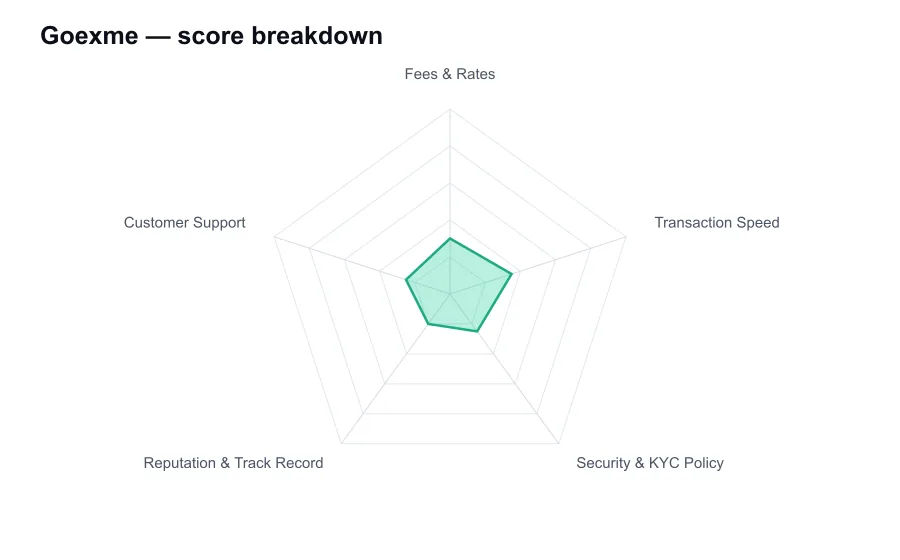
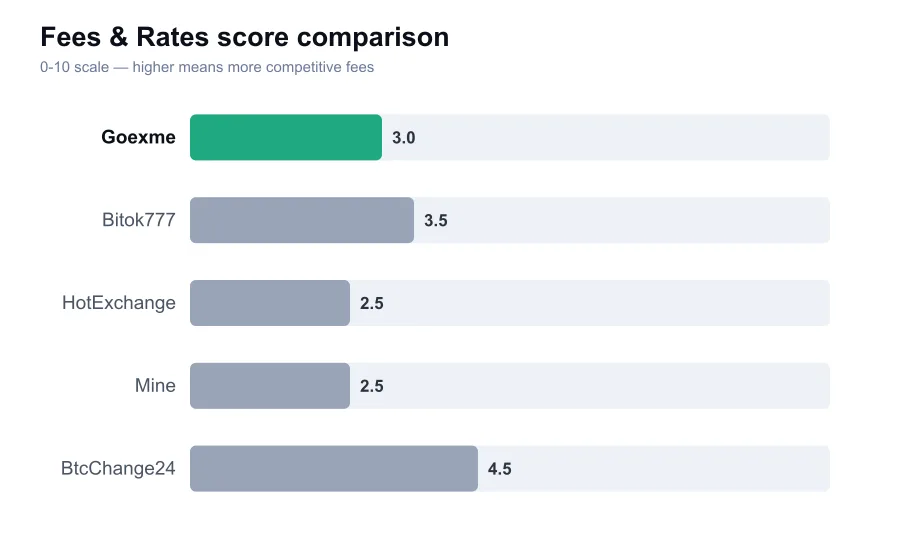
I would not treat Goexme as a normal price-shopping destination until it proves more than its interface. The first concern is fee disclosure. I could not verify a clear, durable public schedule showing a flat commission, fixed-rate premium, partner spread policy or network-fee treatment. If a provider cannot explain how it earns money in language a customer can check before sending funds, that is a serious weakness.
Some instant services charge a stated 0.5% or 1%, making comparison possible even if the quote is not the best. Goexme does not offer that same level of confidence from the information readily available to a prospective customer. That does not prove excessive charges. It means the customer has no solid basis for knowing whether an attractive quote contains a wide spread until after comparing the actual received amount.
Speed claims deserve similar caution. Any service can say it processes exchanges quickly. Actual speed depends on the deposit chain, confirmation rules, liquidity providers and the operator's ability to handle exceptions. I found no sufficiently detailed, independently established performance history for Goexme that would let me say it reliably settles swaps within a particular time range. That is not a detail to gloss over.
For a Bitcoin swap, a delay might be caused by the network. For a token swap on a fast chain, a long delay is harder to excuse. A reputable service should publish clear status information, order tracking and a process for late or underpaid deposits. Customers considering Goexme should test all of those assumptions with a very small amount. Do not let a clean landing page substitute for evidence.
The security and identity-verification position is also insufficiently clear. Some users seek smaller exchangers because they expect no KYC. That is the wrong priority if the provider does not clearly state its compliance policy, transaction monitoring rules or grounds for a hold. A customer can be exposed both ways: funds might be accepted by an opaque operator, or an order could be frozen without a clearly documented escalation path.
A lack of routine account creation is not automatically a privacy advantage. It can mean there is no two-factor authentication, no device controls, no withdrawal allowlist and no persistent record a customer can manage. Those features are less relevant for a one-time swap, but they show why the real security question is whether the company handling the temporary custody is trustworthy. On that question, Goexme provides too little that can be independently tested.
Reputation is where Goexme falls furthest behind. I could not establish the same kind of long, traceable operating record associated with better-known instant exchange brands. That does not automatically make it fraudulent. It does mean there is little margin for error. In crypto, unknown services deserve skepticism by default because irreversible transfers leave customers with very limited remedies.
A reviewer should not manufacture certainty from missing data. There is no responsible basis for attaching a verified founding year, asset count, transaction limit or regulated operating entity to Goexme without primary documentation. That lack of verifiable facts is itself relevant editorial information. Serious financial services should make basic facts discoverable, especially when they are asking people to transfer valuable digital assets.
Support is impossible to score generously under those conditions. Even if a website offers a contact form or chat widget, a customer needs to know who answers, how quickly they respond, and what happens if the transaction is sent to an incorrect network or held for review. I found no strong public evidence of a mature support operation or formal dispute route. That makes the service unsuitable for urgent or consequential transfers.
There is also a broader operational issue. Tiny instant exchangers can depend heavily on outside liquidity and wallet infrastructure. If that relationship fails, users may face a pending order while the operator has little ability to resolve it quickly. Larger competitors have the same dependency, but their longer records and more visible support teams make them easier to assess. Goexme has not earned that benefit of the doubt.
If you still decide to try it, use a throwaway-sized test transaction from a wallet you control. Take screenshots of the quote, payment instructions and order identifier. Verify the destination address independently and never send an amount that would hurt to lose or have delayed. Avoid using the service for privacy-sensitive, time-critical or large-value transfers.
My view is blunt: Goexme has not demonstrated enough public transparency to compete with established instant exchange providers. The category is already risky because the customer sends first. An operator with unclear fees, limited verifiable history and uncertain support procedures adds avoidable risk. Until it publishes stronger documentation and earns a meaningful track record, I would choose a more established provider every time.