CCECash is a small exchange service operating in the quick-conversion corner of crypto. It is aimed at users who prefer a direct transfer workflow over opening an account at a major exchange. That can sound refreshingly simple, but simplicity in the interface does not remove the need to judge the operator behind it.
The service model is familiar: select a conversion, follow deposit instructions, and wait for an outgoing payment. It is designed for exchange rather than active trading. You will not find the execution controls, portfolio tools, or market transparency that come with a conventional centralized exchange.
For small transactions, the direct approach can be convenient. A user who has Bitcoin in a self-custody wallet and wants a different supported asset may value a short exchange path. The trouble starts when a customer assumes that a short form means low risk. The service remains an intermediary that takes custody of funds during the transaction.
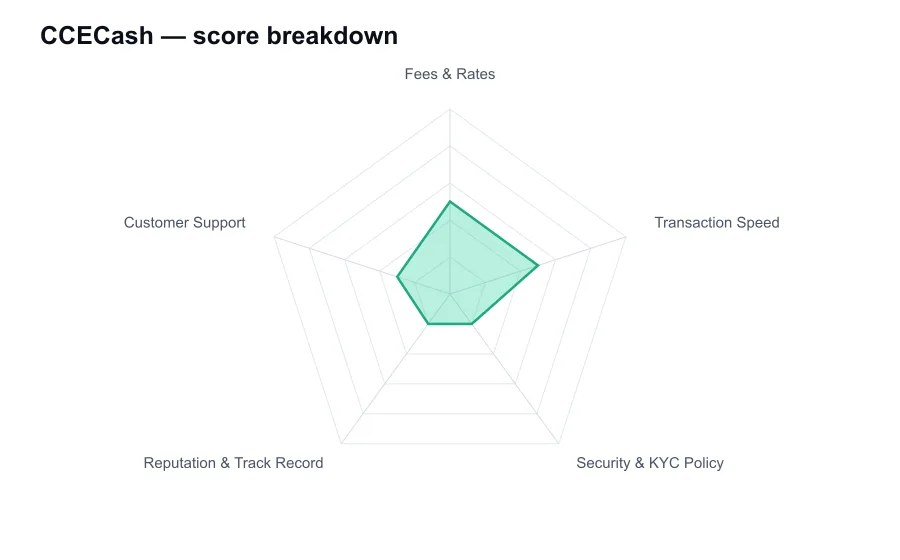
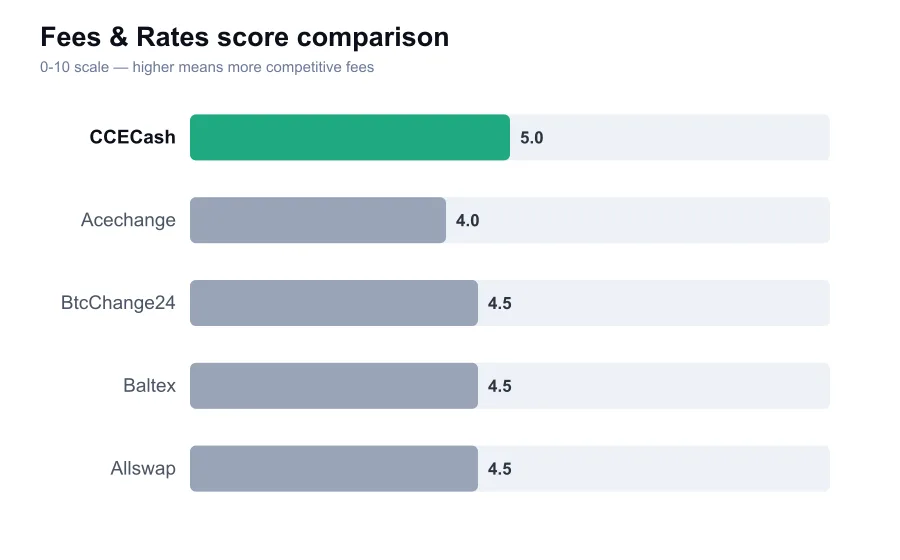
CCECash does not stand out as a low-fee leader because its pricing is principally quote-based. The amount you receive is the only figure that matters. A user should compare it with market pricing and with quotes from other instant exchangers, after accounting for withdrawal and network costs. Anything less is guesswork.
The spread can be especially important on smaller tokens, low-liquidity routes, or chains with high transaction costs. A provider may show an attractive starting rate while protecting itself against volatility through a wider final quote. That may be commercially understandable, but it is bad value for a user who does not check the numbers.
Processing speed is hard to assess confidently without a detailed published service standard. A successful order can move quickly after the incoming payment is confirmed. Yet blockchain confirmation time, liquidity sourcing, manual review, and wallet maintenance can all slow the process. CCECash offers less public operational detail than larger competitors.
This is not a place where I would send funds because a transfer is urgent. If the payout must arrive before a deadline, use a large exchange with a known withdrawal process or hold the target asset beforehand. Instant exchanger marketing often creates unrealistic expectations about the difference between a quote request and a guaranteed settlement time.
The security question is mostly one of operational trust. CCECash does not have the highly visible security reporting, proof-of-reserves material, named regulatory framework, or independently audited disclosures expected from mature custodial platforms. A small provider can run safely, but customers have fewer ways to verify that claim from outside.
A further concern is the handling of exceptional cases. Wrong-chain deposits, incorrect memo fields, underpayments, and flagged transfers are not minor problems. On a large exchange, there may be documented recovery procedures and a support hierarchy. At a smaller service, resolution can depend on manual availability and the provider's internal policy.
The KYC expectation should be pragmatic. Limited-registration services can still stop or review an order if automated checks identify a risk signal. CCECash should not be selected by someone whose plan depends on every transfer being processed without questions. That is not how compliance exposure works in crypto exchange services.
Its reputation is the weakest part of the proposition. CCECash does not have a broad, deeply documented public history comparable to well known global platforms. There is not enough independently visible evidence to justify a high confidence score. That is a reason for smaller transaction sizes, not a claim that every order will fail.
Support deserves similar caution. A contact method is not the same as responsive dispute handling. Before funding an exchange, look for current support instructions and read the terms covering delayed orders, refunded deposits, and verification requests. If you cannot identify a practical way to reach support before sending money, do not proceed.
CCECash may have a place for technically capable users who understand network mechanics and want to test a niche conversion route. Even then, the sensible approach is conservative. Use a fresh wallet address, avoid sending your entire balance, and never treat a displayed quote as final until you understand the selected rate terms.
My assessment is that CCECash is viable only as a carefully tested convenience option. It lacks the public depth needed to compete on trust with larger exchanges and better documented instant-swap brands. The absence of strong evidence is not proof of wrongdoing, but it is enough to make this a service for small amounts rather than meaningful holdings.