DefiLlama is not an exchange, even though many people first encounter it while looking for somewhere to swap tokens. It is a DeFi analytics platform that tracks total value locked, protocol revenue, chain activity, yields, bridges, stablecoins, token unlocks, and other on-chain data. It has become one of the most useful free research tools in crypto because it tries to make fragmented protocol information comparable without turning every page into a sales pitch.
The main DefiLlama site is essentially a data terminal for decentralized finance. A user can compare the TVL of Aave, Maker, Lido, Curve, Uniswap, and thousands of smaller protocols. They can view chain-level numbers for Ethereum, Solana, Arbitrum, Base, Tron, and others. The value is not that a single number tells you whether a protocol is safe. The value is that it gives you context before you take a risk.
Its free access is a major advantage. Many crypto data terminals reserve useful historical charts, revenue data, and export features for expensive subscriptions. DefiLlama has kept a large part of its product free and publishes a public API for many data sets. That has earned it unusual goodwill among researchers, journalists, developers, and retail users who want better information without paying a professional-terminal price.
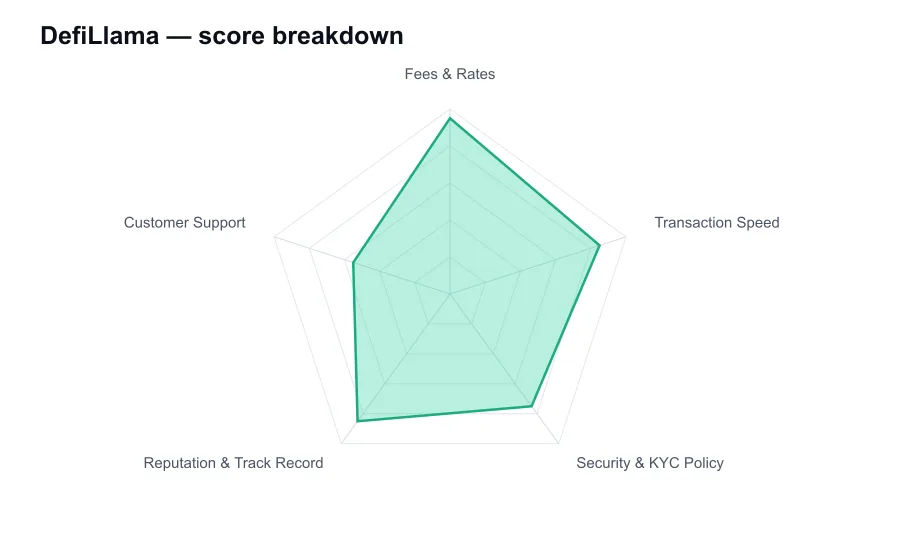
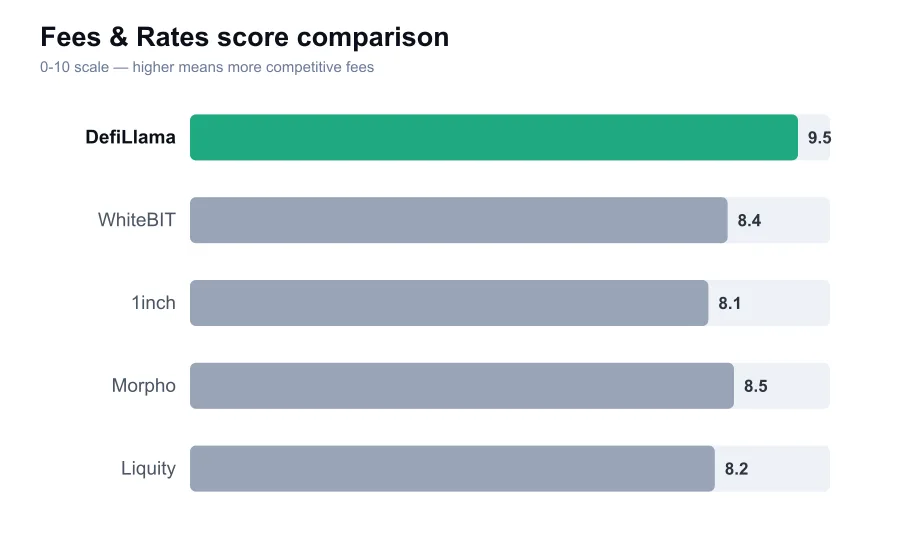
There is no standard trading fee because the main product is data. You do not deposit assets to browse protocol rankings, inspect TVL charts, search stablecoin supply, or use much of the API. That sharply reduces the financial risk associated with simply using the site. The user is not trusting DefiLlama with a custodial balance in the way they would trust a centralized exchange.
DefiLlama also offers tools beyond dashboards. Its yield pages collect opportunities across protocols, while LlamaSwap routes token swaps through decentralized liquidity sources and aggregators. These additions are useful, but they require a different risk mindset. The moment you connect a wallet or sign a swap, you are no longer just reading data. You are interacting with smart contracts, routing infrastructure, and the risks attached to the selected token and network.
LlamaSwap advertises a zero-fee approach at the interface level, but that does not mean a swap is costless. The route can include liquidity-provider fees, price impact, and network gas. A quote on Ethereum can be more expensive than a similar swap on a rollup because gas is substantially higher. The right comparison is the final amount received, not a marketing label about a zero platform fee.
Data speed is good, though readers should understand the limits of on-chain analytics. DefiLlama gathers information from chains and protocol adapters, then normalizes and displays it. That means TVL can update quickly without being a perfect real-time representation of every contract state. Prices, bridge balances, token classifications, and protocol methodology can all change. Fast dashboards are useful, but they do not replace reading a protocol's own documentation or checking an explorer for critical decisions.
The platform's methodology is one reason it has become influential. DefiLlama generally tries to exclude double counting and distinguish between categories of value rather than inflating figures for attention. Those judgment calls are difficult. A protocol may dispute how its assets should be counted, or an asset may be wrapped several times across chains. DefiLlama's numbers are estimates built from public data and stated methodology, not audited financial statements.
Security for ordinary site visitors is relatively strong because there is no account balance to steal and no ordinary KYC process. Still, a research platform can create indirect security risk. Users may follow a yield link into a dangerous protocol, mistake a token with a familiar name for the real one, or connect a wallet to a fake copy of a useful tool. Bookmarking the real defillama.com domain is a sensible basic precaution.
DefiLlama's own history includes a public governance dispute in March 2023. A contributor announced plans to fork the site after alleging an attempted token launch that lacked team consensus. The dispute was resolved and the main service continued, but it exposed tensions around ownership and control. It did not resemble an exchange insolvency event, yet it was a reminder that even apparently public-minded crypto projects can have internal governance problems.
The team handled its reputation reasonably well after that episode by continuing to operate and keeping the core data service useful. DefiLlama's standing rests more on years of practical output than on brand polish. Researchers regularly cite its figures, and its dashboards are often the quickest way to spot whether capital is moving into or out of a chain. That is meaningful credibility, though it should not make users treat every listed protocol as vetted.
Support is limited in the traditional consumer-finance sense. DefiLlama has community and social channels, GitHub resources, documentation, and a public-facing team presence. What it does not offer is the kind of account-specific support desk needed to rescue a bad wallet signature or recover funds from a swap. That is appropriate for an analytics site, but users who expect bank-style assistance will be disappointed.
The yield section deserves particular caution. High displayed APYs can result from volatile incentive tokens, temporary emissions, leverage, or a pool that has not faced real market stress. A yield listing is a research lead, not an endorsement. Before depositing, check the protocol's audit history, contract age, TVL trend, token concentration, withdrawal rules, and whether the quoted yield is paid in a token you would actually want to own.
For serious DeFi users, DefiLlama is close to essential. It is fast, broad, and far less promotional than much of crypto media. For newcomers, it is valuable as a map, provided they do not confuse a ranking page with investment advice. The service helps people ask better questions, which is often more useful than a site pretending to have all the answers.
My take is strongly positive. DefiLlama's free data and broad coverage make it one of the better public goods in DeFi. Its weaknesses are mostly the unavoidable limits of aggregation, plus a support model that cannot protect users from their own on-chain decisions. Use it to investigate protocols, compare narratives with data, and spot risks. Do not use any dashboard, including this one, as a substitute for due diligence before connecting your wallet or chasing yield.