Independent Reserve is a regulated Australian cryptocurrency exchange aimed at investors who want a local fiat gateway without the chaos that still surrounds many offshore platforms. It began operating in 2013, which makes it one of the older surviving exchanges in Australia. Its appeal is not flashy token launches or leverage products. It is a fairly conservative venue for buying, selling, storing, and transferring major digital assets with Australian dollars.
That positioning matters. Independent Reserve is trying to compete less with Binance's enormous product catalogue and more with providers such as CoinSpot, BTC Markets, Kraken Australia, and Swyftx. It feels closer to a brokerage and spot exchange built for people who care about bank transfers, tax records, account controls, and a recognisable legal entity. For many Australian users, that is a sensible trade.
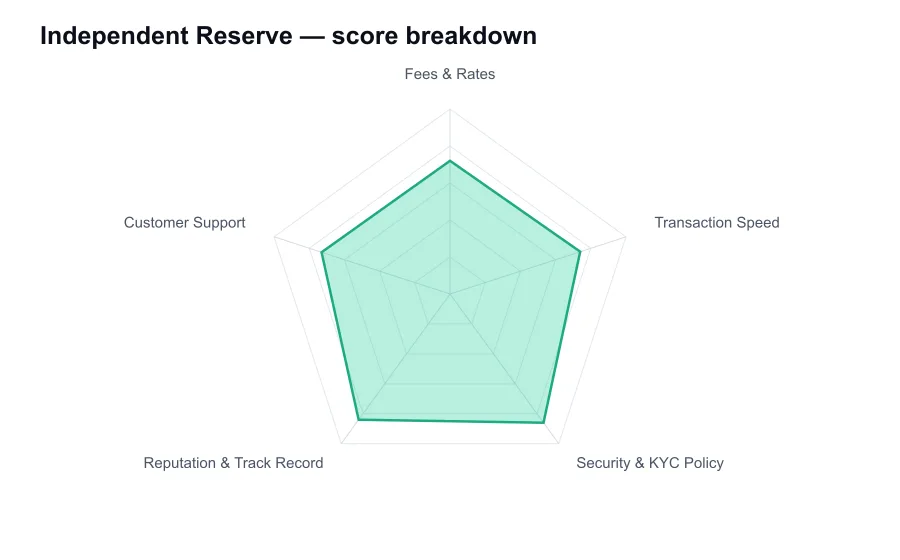
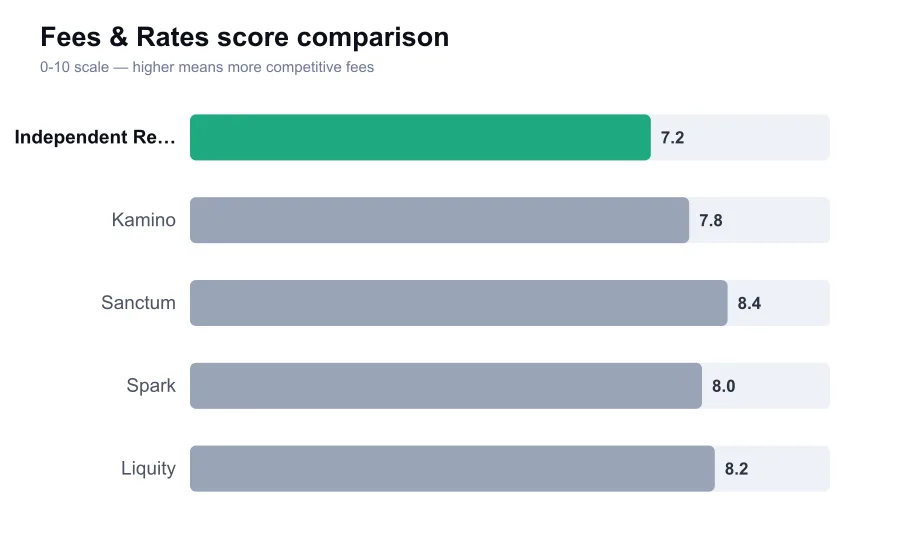
The fee structure is more competitive than its simple interface initially suggests. Instant buys and sells can carry a higher quoted spread, so frequent traders should use the order-book exchange instead. Trading fees start at 0.50 percent for low-volume users and can fall as low as 0.05 percent for clients trading more than AUD 100 million over 30 days. That isn't the cheapest entry-level rate in Australia, but it is transparent and becomes respectable at scale.
A 0.50 percent starting fee is not a bargain next to Kraken Pro or Binance's standard 0.10 percent spot fee. It is, however, easier to stomach than the often wider retail spreads charged by simple-buy apps. Independent Reserve's volume tiers reward users who place proper limit orders and consolidate trading activity. Casual buyers placing a few orders per year will probably notice the difference less than active market participants.
Australian dollar deposits through PayID and bank transfer have historically been a strong point. A local bank transfer is generally much less frustrating than funding an offshore exchange through cards, international transfer rails, or stablecoins. Withdrawals to an Australian bank account are commonly processed on business days, though a bank's own processing times still apply. The platform's speed is good for a regulated fiat exchange, rather than instant in the way an on-chain swap is instant.
Crypto withdrawals depend on the asset and its network, and Independent Reserve applies security review procedures that can slow a newly added withdrawal address or an unusual request. That is annoying when markets are moving quickly. It is also preferable to an exchange treating every withdrawal as routine after a password reset. Users who need minute-by-minute movement between chains should keep some assets in self-custody rather than rely on any centralised exchange account.
The security posture is one of Independent Reserve's better qualities. The business is registered with AUSTRAC as a digital currency exchange provider and requires identity verification before customers can use fiat services fully. KYC is mandatory, not optional. Australian customers should expect identity documents and checks designed to meet anti-money-laundering requirements, which makes this a poor fit for privacy-first traders.
Independent Reserve says it uses offline cold storage for the majority of customer digital assets, multi-signature processes, encryption, and account security controls. Users can enable two-factor authentication and use withdrawal address whitelisting. These are solid foundations, although no exchange customer should confuse cold storage claims with a personal guarantee. You still hold a claim against the platform, not coins under keys you control.
The company has avoided the notorious collapses, exit scams, and reckless lending exposure that have destroyed several well-known crypto brands. That track record carries weight. It has operated through the 2017 retail boom, the 2022 exchange failures, and several Australian banking disruptions without becoming a headline for losing customer assets. Longevity alone is not proof of safety, but thirteen years of continuous operation is meaningful in this industry.
There are limits to that reputation. Independent Reserve is a smaller exchange than global giants, with thinner liquidity on many smaller pairs. Major markets such as BTC/AUD, ETH/AUD, XRP/AUD, and USDT/AUD are the sensible places to trade. If you want dozens of obscure altcoins, perpetual futures, copy trading, or deep derivatives liquidity, this is the wrong venue. Its restraint is partly a feature and partly a constraint.
Its cryptocurrency selection is adequate, not expansive. You can access established assets including Bitcoin, Ethereum, XRP, Solana, Cardano, Polkadot, Chainlink, Litecoin, and stablecoins, but it does not chase every new token. That policy reduces exposure to obvious rubbish, yet it may frustrate users accustomed to CoinSpot's broader menu. Serious investors usually benefit more from dependable fiat access than from another hundred micro-cap listings.
The account experience is fairly plain, and I mean that as mild praise. The web platform has charting, market and limit orders, recurring purchases, tax-reporting connections, and portfolio views without burying basic actions under promotional banners. Independent Reserve also operates an OTC desk for larger transactions. That service is useful for businesses, SMSFs, and high-net-worth buyers who don't want a sizeable order chewing through visible order-book liquidity.
Customer service has a better reputation than many offshore rivals, although it is not magic. Help is available through support channels and a detailed knowledge base, but urgent trading problems can still feel slow compared with a phone call to a traditional broker. The team is based around Australia and Singapore, which is reassuring for local users. Expectations should remain realistic: account reviews and compliance questions rarely get solved in five minutes.
Independent Reserve suits an Australian investor who wants a long-running, locally regulated exchange and plans to trade established assets rather than speculate on every new listing. It does not win a price war at the entry tier, and its range will look conservative beside Binance or OKX. Still, its banking access, compliance standards, volume-based pricing, and sober operating history make it one of the more credible Australian choices. I would use it as a fiat gateway and spot venue, then move long-term holdings to a hardware wallet.