Kamino is one of Solana's most important DeFi protocols, although calling it just an exchange would miss the point. It is primarily a lending and liquidity platform where users can deposit assets to earn yield, borrow against collateral, manage leveraged positions, and use automated liquidity vaults. It sits closer to Aave on Solana than to a retail crypto app, and it demands a much higher level of user competence.
The protocol grew out of Solana's push to make on-chain finance cheap and fast. That gives Kamino a real advantage over comparable Ethereum mainnet products. Deposits, borrows, repayments, and collateral adjustments usually settle in seconds, with transaction costs typically measured in fractions of a dollar. During normal network conditions, that experience feels dramatically better than waiting for expensive Ethereum transactions to confirm.
Speed is not the same thing as safety. Solana congestion or outages can delay users precisely when volatile markets make collateral management urgent. Kamino's transactions may be fast, but a borrower cannot assume they will always get a rescue transaction through before liquidation. Anyone borrowing against volatile collateral needs a conservative health factor, spare SOL for transaction fees, and a practical understanding of the protocol's liquidation rules.
Kamino Lend is permissionless. You connect a Solana wallet, choose a market, and deposit an asset such as SOL, USDC, USDT, JitoSOL, or other supported collateral. Depositors receive interest based on borrowing demand. Borrowers can draw another supported asset while keeping their deposited tokens locked as collateral. There is no account creation desk, no identity review for normal protocol use, and no customer service agent who can reverse a bad signature.
That lack of KYC is useful for self-custody users and a nonstarter for institutions with rigid compliance requirements. It also means the protocol cannot verify whether a connected wallet is controlled by a competent person, a scam victim, or a sanctioned party. Front-end access can still be subject to geographic restrictions or third-party wallet checks, but the core smart contracts are designed to be interacted with on-chain.
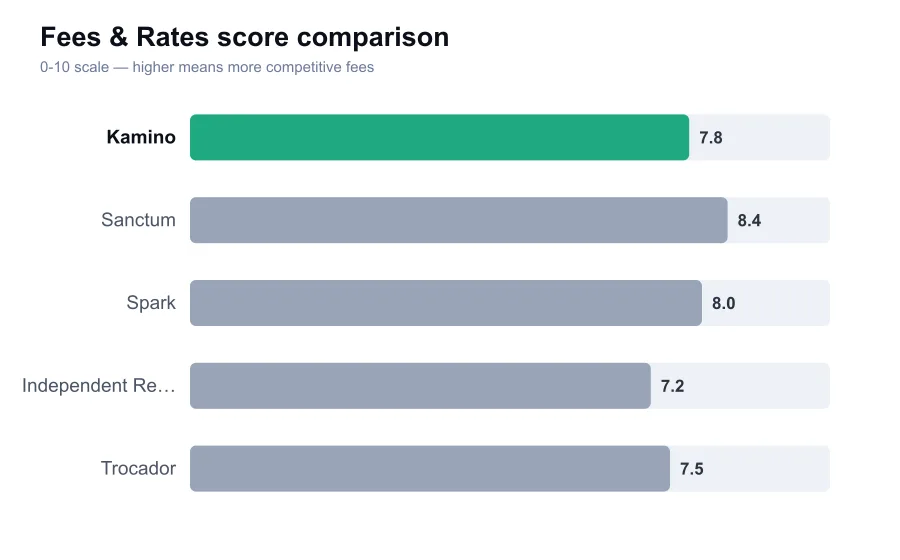
Fees are more complicated here than on an ordinary exchange. A depositor's return and a borrower's cost are variable interest rates, driven by each market's utilisation. Rates can be attractive during heavy demand and collapse when liquidity is abundant. Borrowing also involves protocol and reserve factors built into the market model, while liquidations impose a penalty that is much more important than any small transaction fee.
The most dangerous cost is liquidation, not the advertised APR. If the value of collateral falls or the borrowed asset rises relative to it, a position can become eligible for partial liquidation. Liquidators repay debt and claim collateral at a discount. That mechanism protects depositors, but it is brutal for a borrower who treats a 70 percent loan-to-value ratio as a target instead of a ceiling.
Kamino's liquidity products add another layer. Its automated liquidity vaults manage concentrated liquidity positions on Solana decentralised exchanges. In theory, that reduces the work required to maintain price ranges and collect fees. In practice, you are accepting strategy risk, impermanent loss, smart-contract risk, and exposure to whatever token pair the vault holds. A slick dashboard does not convert an automated market-making strategy into a savings account.
The protocol has received audits from recognised smart-contract security firms and operates a bug bounty program. That is better than unaudited Solana yield farms, but audits are evidence of effort rather than proof against loss. DeFi failures often come from oracle weaknesses, parameter errors, liquidity shocks, integration failures, or a vulnerability in a dependency. Users should read risk disclosures instead of treating an audit badge as insurance.
Kamino's reputation within Solana is strong. It became a major lending venue and has remained visible through the difficult periods that wiped out many short-lived DeFi projects. Its governance token, KMNO, adds community governance and incentive mechanics, though token ownership should not be confused with deposit protection. Governance can improve accountability, but it can also introduce parameter changes that users need to monitor.
Its interface is unusually polished for DeFi. Health factors, collateral composition, projected interest, and liquidation parameters are presented more clearly than on many older protocols. That helps, particularly for experienced users comparing markets. But clean design can create false confidence. A new user may still sign approvals, choose an unsuitable collateral pair, or borrow too much without grasping how quickly the numbers can change.
Support is naturally weaker than at a regulated exchange because Kamino is a protocol, not a custodian with a call centre. Documentation, Discord, social channels, and community support can help explain features or flag a known incident. They cannot recover a seed phrase, undo a wallet compromise, or guarantee individual reimbursement. That distinction should be obvious, yet it remains one of the most expensive lessons in DeFi.
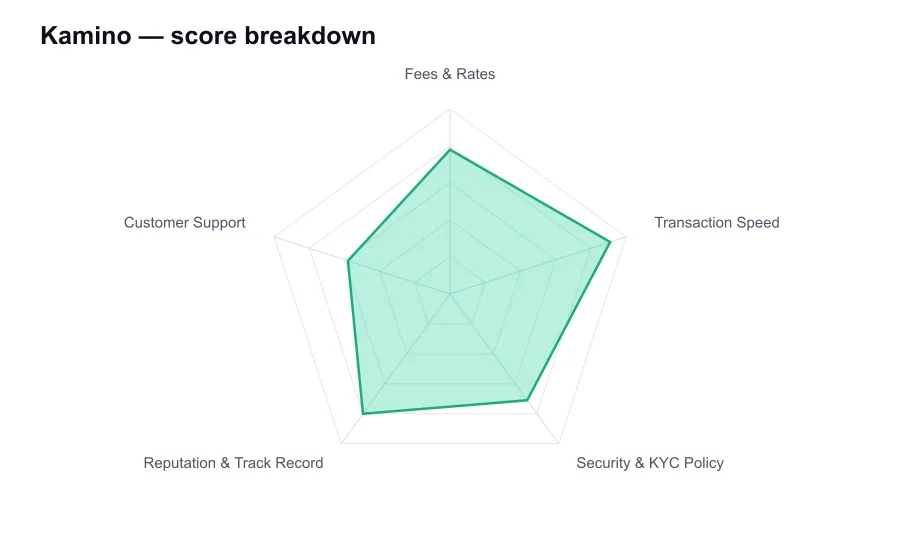
Kamino is strongest for experienced Solana users who want capital-efficient lending or want to earn variable yield while retaining wallet control. I like its product depth, transaction speed, and relatively mature standing in the Solana ecosystem. I do not like seeing it presented as a low-risk yield account, because that is simply wrong. Borrow conservatively, isolate experimental assets from core holdings, and assume a liquidation can happen during the worst possible market move.
My view is that Kamino is a serious protocol for people who already understand DeFi mechanics, not a gateway product for a first-time crypto buyer. It scores well on execution speed and protocol reputation, but no permissionless lending app deserves a top security score merely because it has audits. The user carries meaningful operational responsibility. If you want reversibility, KYC-led controls, and human account support, use a regulated centralised provider instead.