YaObmen is a crypto exchange service built around quick conversions rather than an order book trading terminal. It belongs to the large group of web based exchangers that promise a simpler route from one digital asset to another, and in some cases between crypto and payment methods, than a full centralized exchange account. The proposition is practical, particularly for users in markets served by regional payment rails, but this type of business requires more scrutiny than its clean interface suggests.
The core transaction is straightforward. A customer picks a direction, enters an amount, provides a receiving address or payment details where relevant, and sends the required funds. YaObmen then processes the conversion and releases the other side. That workflow is useful for someone who wants a single exchange operation rather than charts, API trading, leveraged products, or a custodial balance. It is not designed to replace a deep liquid trading venue.
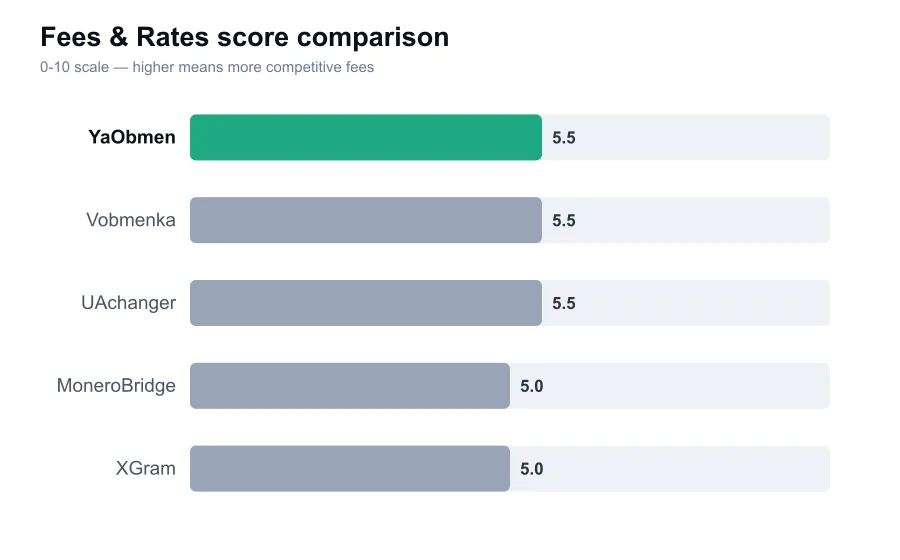
The most important number at YaObmen is not a published percentage fee. It is the final payout shown for the exact amount and route you select. Like many exchange services, YaObmen's economics are usually expressed through its rate. The spread may include its operating margin, external liquidity costs, payment processor charges, and blockchain fees. A customer who focuses only on a displayed headline rate can miss the real cost.
For standard crypto pairs, the difference may be acceptable if speed and convenience matter more than squeezing out every basis point. For bank, card, cash transfer, or lower liquidity directions, I would be much more demanding. Payment rails introduce costs and reversal risk that a crypto only swap does not have, and rates can move materially during the order process. Compare the received amount with at least one established exchange and one competing exchanger before committing.
YaObmen is more useful when the service supports a route that your preferred major exchange does not conveniently offer. That is a real niche. A person who needs to convert a particular coin into a locally useful payment method may value practical access above the theoretical best rate. Still, that is precisely where customers need to be careful. Less liquid payment directions often have tighter limits, more manual handling, and more conditions around name matching or proof of payment.
Speed is route dependent. A blockchain to blockchain exchange can be relatively quick after the deposit receives enough confirmations. A transaction involving a bank transfer, card payment, or manual payment verification can take much longer because the exchange is waiting on systems outside its direct control. The word instant should be read as a description of the intended service model, not as a binding promise that every order will settle in minutes.
There is another speed complication, rate protection. If the service offers a fixed calculation, the customer needs to send the exact amount to the correct address or payment details before the quote window expires. A late payment, short payment after a network fee, or incorrect transaction reference can require manual work. Floating calculations are more forgiving in some respects, but the eventual result can change with the market. Neither model is inherently superior. The customer has to know which one applies before paying.
Security at YaObmen is less about account hardening and more about execution controls. An exchange order involves irreversible transfers, so a mistaken address or selected network can be far more dangerous than a bad password. The service can reduce some risk by displaying clear instructions and transaction status, but it cannot undo a completed blockchain transfer merely because the sender clicked the wrong chain. Customers need to slow down during the few minutes before payment.
The KYC and AML question should not be oversimplified. A user may be able to create an order without submitting identity documents first, yet YaObmen can still request information if an order triggers compliance monitoring or a payment provider requires it. That creates an important practical distinction between no routine registration and no verification. They are not the same thing. If privacy certainty is central to your decision, this service is not an appropriate assumption based purchase.
A reasonable compliance process is not itself a mark against an exchanger. The issue is whether the rules are clear, proportionate, and supported by responsive communication when a case is flagged. With smaller exchange services, customers have less leverage than they would at a heavily regulated multinational platform. If funds are held for review, the quality of the explanation, requested evidence, and response time become decisive. Do not send an amount that would create financial trouble if it were unavailable for several days.
YaObmen has a more recognizable presence in the exchanger category than a brand new anonymous page, but its reputation should still be assessed as that of a specialist service, not a top tier global exchange. It does not carry the same level of public financial disclosure, licensing visibility, or widely tested infrastructure as Coinbase, Kraken, or Bitstamp. Users should look at independent monitoring listings and recent feedback, then read complaints for detail rather than trusting a numerical rating alone.
The complaints that matter most in this sector tend to concern changed rates, delayed payouts, disputed payment instructions, verification requests, and disagreements about whether a customer sent the required amount. Some of those cases are caused by user mistakes. Some are not. YaObmen should be judged by how it documents the transaction and responds to a specific order, not by broad promises of fast exchange. Keep a record from the moment the order is created.
Support is particularly important for YaObmen because payment directions can involve details beyond a blockchain hash. A useful support agent needs to identify an order, verify the payment status, explain any discrepancy, and tell the customer what evidence is needed next. Before relying on the service for a larger transfer, I would test its support with a precise question about the intended route. A prompt, specific answer is a better sign than generic marketing language.
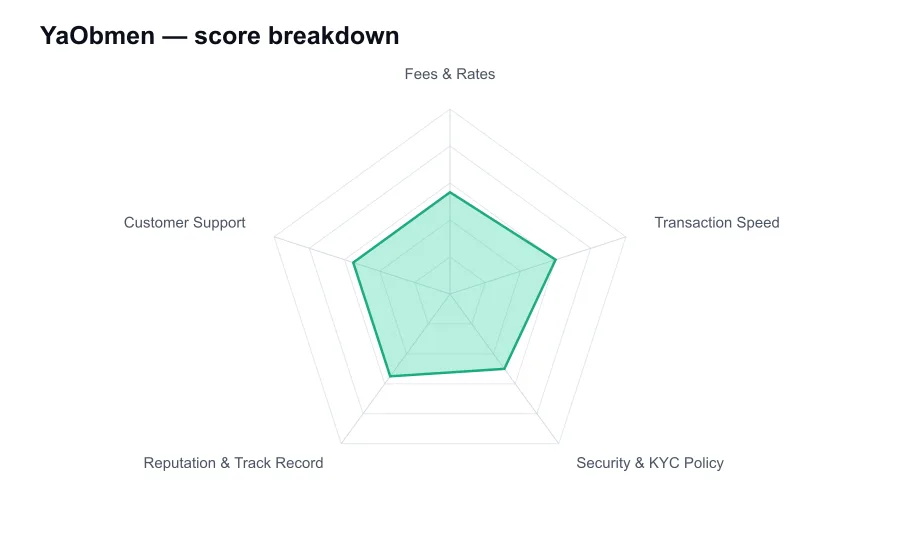
My view is that YaObmen can be a practical specialist for users who need a supported conversion route and are willing to do their checks. It is not the place I would choose for speculative trading, a large treasury conversion, or money that must settle on a strict deadline. The service's value is access and convenience, while its weak points are rate opacity, route dependent processing, and the smaller public accountability common to this market. Use it carefully, compare the payout, and start small.