Coinomi is one of the older names in self-custody crypto wallets. It launched in 2014, long before mobile wallets became polished consumer products, and it still positions itself as a multi-chain wallet for people who want broad asset support without opening an exchange account. That history matters. Coinomi is not a trading venue in the Coinbase or Kraken sense. It is a wallet first, with exchange and purchase services placed inside the app through outside providers.
The core proposition remains straightforward. You create or restore a wallet, control the recovery phrase, and use Coinomi to hold, send, receive, and in some cases swap assets. That setup gives users more control than leaving coins on a centralized platform. It also means mistakes are largely final. If you lose the phrase, send funds to the wrong chain, or approve a bad transaction, Coinomi cannot reverse it for you.
Coinomi's biggest practical strength is coverage. It supports major assets such as Bitcoin, Ethereum, Litecoin, Bitcoin Cash, XRP, Dogecoin, and many ERC-20 and other network tokens. For a user with an older or less fashionable altcoin portfolio, Coinomi can be more accommodating than the tightly curated wallets favored by newer users. The wallet has long been useful for people consolidating a mixed collection of assets rather than running a complicated DeFi setup.
That breadth has a cost. The interface can feel dated beside Exodus, Trust Wallet, or Rabby. Coinomi has added functions across many chains over the years, but it does not always present them with the clarity of a wallet built around a smaller set of modern networks. A beginner can use it for basic sending and receiving, yet the depth of menus, coin settings, and provider choices can make the app feel more technical than it needs to be.
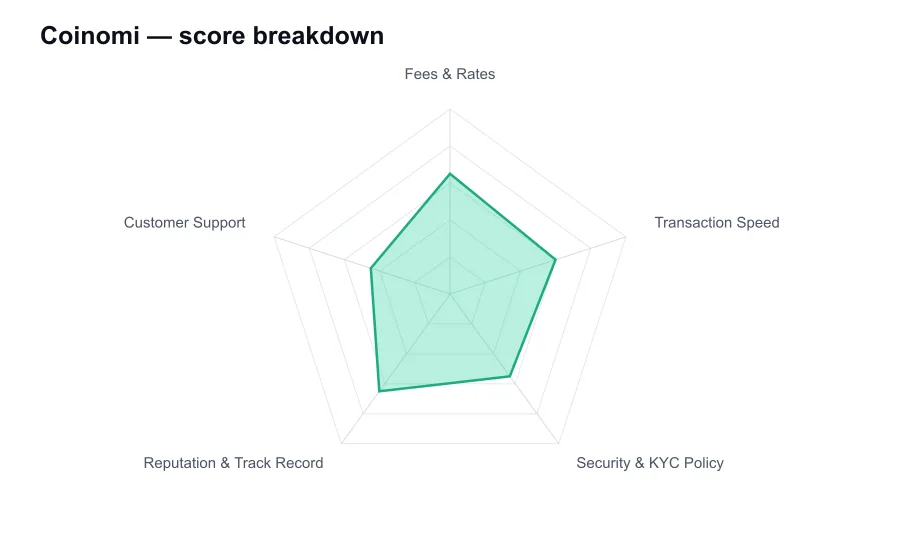
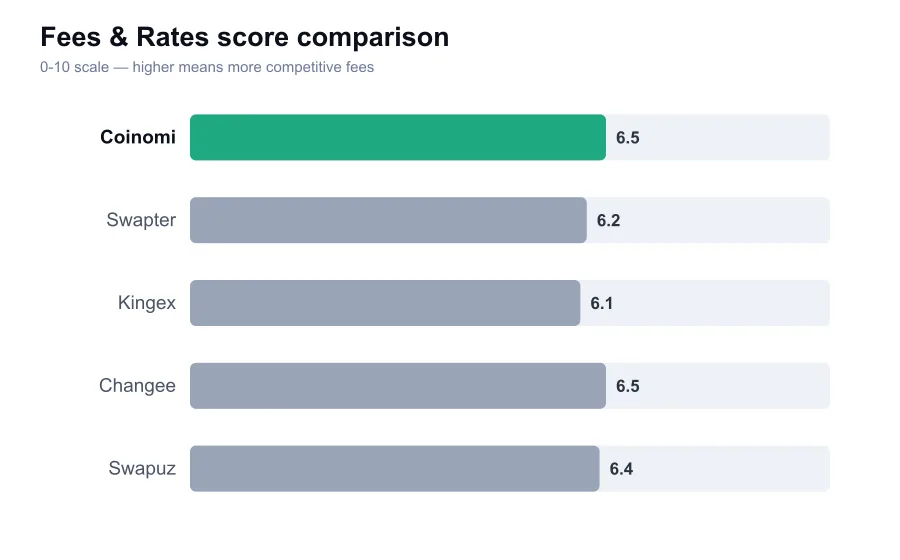
Coinomi itself does not charge a conventional custody or account fee. Downloading the app and holding supported assets is free. The actual network fee for an on-chain transaction goes to miners or validators, and that cost varies with the network. Bitcoin transaction costs can rise sharply during congestion, while an Ethereum transaction may be expensive when gas is high. Those costs are not a Coinomi markup, although the wallet's fee controls still affect how promptly a transaction is likely to confirm.
The more complicated fee story begins with built-in swaps and fiat purchases. Coinomi routes those functions through third-party partners. The quoted price can include partner fees, liquidity costs, network charges, and a spread between market price and the amount you receive. This is convenient, but rarely the cheapest way to trade. A user buying a large amount of BTC through an integrated provider should compare the quote against Kraken, Coinbase Advanced, or a reputable local exchange before accepting it.
Speed follows the same pattern. Sending crypto from Coinomi is only as quick as the underlying network and the fee selected. A Litecoin payment may settle quickly and cheaply. Bitcoin can take around ten minutes per block and often needs several confirmations before a recipient is comfortable treating it as final. Ethereum transfers usually appear quickly but can remain pending if the selected gas price is too low. Coinomi cannot make a congested chain move faster.
In-app exchanges add another layer. A swap is not an atomic, immediate action in the way the button wording may suggest. The provider must receive the deposit, wait for the required network confirmations, complete the conversion, and send the output asset. Small swaps on liquid networks may finish in minutes. Bitcoin-based swaps can take materially longer. If the market moves while a floating-rate quote is being processed, the final result can differ from what a casual user expected.
Security is where Coinomi deserves a measured rather than glowing assessment. It is a non-custodial wallet, so private keys and recovery material are generated and stored on the user's device rather than held in a central Coinomi account. That removes exchange insolvency risk and makes broad account freezes less relevant. There is no standard identity verification requirement simply to create a wallet or receive funds.
Still, self-custody is not the same as guaranteed safety. Coinomi users must protect their recovery phrase themselves, use a strong device passcode, keep operating systems current, and avoid fake support staff. The wallet has offered a password layer and biometric options on supported devices, but the recovery phrase remains the decisive key. Anyone who sees it can restore the wallet elsewhere. A screenshot in cloud storage is a security failure waiting to happen.
Coinomi's record also contains a serious historical warning. In 2019, a researcher disclosed a vulnerability involving mnemonic phrases being exposed through an Android spell-checking feature. Coinomi disputed parts of the claim and issued changes, but the episode hurt confidence because a wallet's first job is to keep seed material isolated. Even if the specific issue is old, it is a fair reason to be cautious about treating Coinomi as the best choice for large, long-term holdings.
The company has been around for a decade, which is more than can be said for most wallet apps. Its survival through several market cycles gives it a stronger track record than a brand-new wallet with flashy marketing. Yet longevity should not be confused with current leadership. Coinomi no longer feels like the obvious default for security-conscious users, especially while hardware wallet support and open-source transparency are central concerns for many experienced holders.
Customer support is another weak point. Coinomi offers help articles and ticket-based support, but it does not provide the kind of rapid, accountable service that people expect from a large regulated exchange. The most common support failures involve swap delays, fiat-provider verification, transaction timing, and users who no longer have access to their recovery phrase. The last category is especially harsh because no legitimate support agent can retrieve a seed phrase or restore a wallet without it.
Coinomi is best treated as a flexible everyday wallet for users who understand self-custody and want access to a broad range of assets in one application. It is less persuasive as the place to store a life-changing sum or make frequent, price-sensitive trades. For long-term cold storage, a hardware wallet from Trezor, Ledger, or another well-reviewed provider is the stronger choice. For active trading, a transparent exchange order book is usually cheaper.
My view is that Coinomi remains useful, but it is no longer a category leader. Its asset coverage and no-account setup are genuinely attractive, particularly for holders of older chains. The wallet's dated feel, partner-dependent exchange pricing, and security history keep it from earning a strong recommendation for high-value users. Use it carefully, keep only working balances online, and never confuse a convenient multi-coin wallet with a full security strategy.