Tiendacrypto is a Latin American crypto service built around the practical task many international exchanges handle poorly: buying, selling, and exchanging digital assets with local users in mind. It is closer to a regional broker or exchange than to an anonymous instant swap site. That matters because its value is not just a crypto pair quote. Local payment rails, Spanish-language communication, and familiarity with regional customer needs can make a bigger difference than a tiny spread on a global platform.
The service appears designed for users who want a straightforward path between cryptocurrency and local currency, as well as crypto-to-crypto conversions. That puts it in competition with regional platforms such as Ripio, Buenbit, Lemon, Bitso, and local P2P options, depending on the country and payment method. It is not trying to be Binance. The relevant question is whether it delivers dependable local execution and clear rules, because that is where smaller regional providers either become useful or become risky.
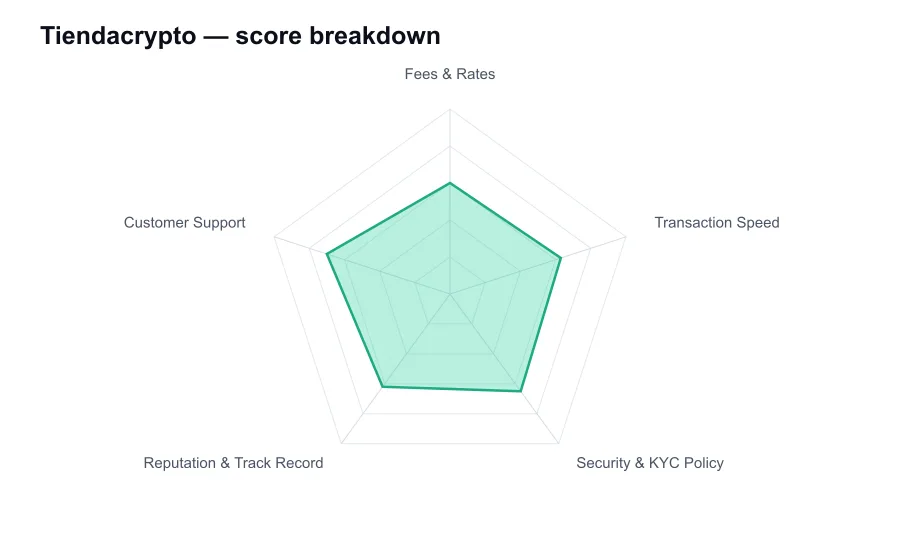
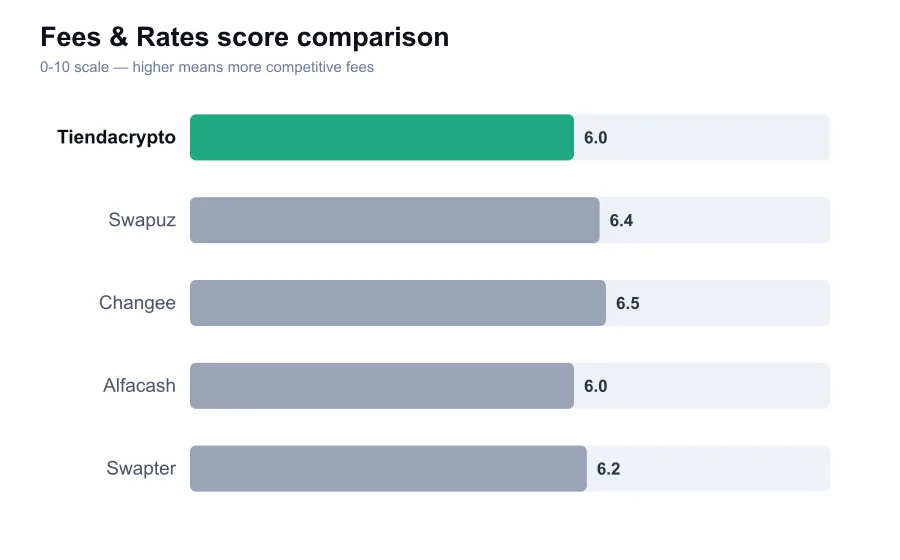
Fees deserve close attention because broker-style platforms often show their economics through the buy and sell price rather than a single trading commission. Tiendacrypto users should compare the quoted price against an independent market reference and against at least one domestic competitor. The difference between the two is effectively part of the cost. Deposit, withdrawal, and blockchain network charges may be separate. A service can advertise a low commission while recovering its margin through the spread.
That isn't necessarily a criticism. A local broker has costs that a global order-book exchange can avoid, including payment processing, local operations, compliance work, and exposure to local currency settlement. The problem begins if those costs are not clear before the customer commits. For a user buying a small amount of bitcoin or stablecoins, a modest convenience spread can be fair. For repeated trading or larger amounts, it is often expensive compared with an exchange that offers a deep order book.
Speed depends heavily on the payment rail and verification state. A crypto withdrawal can be broadcast quickly, then wait for the blockchain. A local bank transfer or cash-related payment method may involve operating hours, manual checks, or financial-system delays. The phrase instant should be read carefully in any local-currency crypto business. A trade can be immediate inside a platform while a fiat deposit, payout, or withdrawal review takes longer.
Unlike an account-free instant exchanger, Tiendacrypto is a customer-facing financial service. That generally means identity verification is part of the experience, especially for fiat features and withdrawal access. This is not a flaw. In fact, for local users it can be a sign that the business is trying to operate within practical compliance expectations. But it does mean this is a poor fit for anyone specifically seeking an anonymous crypto conversion. Expect that account status and transaction size can affect what the service asks for.
Custody is another important difference. A regional exchange or broker may hold customer assets while a trade settles or while a customer keeps a balance on the platform. That is convenient, yet it creates counterparty exposure. The user needs to assess the company's operational security, withdrawal reliability, legal entity, and recordkeeping. Keeping a long-term crypto savings balance at any smaller broker is a different risk proposition from using it to buy assets and withdrawing promptly to a personal wallet.
Tiendacrypto's security score is therefore mixed. KYC and account controls can reduce fraud and make recovery procedures more realistic than they are at a no-account swap service. On the other hand, smaller platforms rarely publish the depth of security documentation, insurance arrangements, proof-of-reserves material, or institutional controls that a customer would like to see. Two-factor authentication, withdrawal confirmation, and clear account security tools matter a great deal. Users should enable every protection available.
Reputation must be judged in a regional context. Tiendacrypto has a more focused profile than major global brands, which can be an advantage if its staff understands the local banking environment and provides responsive Spanish-language assistance. It also means there is less global scrutiny and fewer independent data points. A prospective customer should look beyond promotional testimonials, verify the current legal and contact details, and assess recent user feedback about deposits, withdrawals, and support resolution.
Support is arguably one of Tiendacrypto's strongest reasons to exist. A local user who has a bank transfer issue does not need generic international support that misunderstands the payment method. A Spanish-speaking team with knowledge of the actual process can be far more useful. Still, quality has to be proven in practice. Before depositing a significant amount, test how quickly the company responds to a basic question about funding, fees, verification, or withdrawal timing.
The service is likely most valuable for people converting local funds into major cryptoassets or stablecoins, then withdrawing to self-custody. That workflow reduces the time spent exposed to platform custody while preserving the benefit of local on-ramp support. It is less attractive for an advanced trader seeking perpetual futures, sophisticated charting, API trading, or institutional liquidity. It is also not the place to expect the permissionless behavior of a decentralized protocol.
There are common regional risks that users should not ignore. Local banking rules can change, payments can be reversed or reviewed, and currency volatility can make a quote stale quickly. Stablecoin users should check the exact network for withdrawal, because a cheap network may not be supported by the destination wallet or the recipient. Account names, bank details, and verification documents should match. Mismatches are a frequent cause of avoidable delays.
Against global competitors, Tiendacrypto may lose on asset variety and raw market liquidity. Against a foreign exchange with weak local support, it can win on usability. That is why a blanket score would be misleading. The platform's usefulness depends more on where the customer lives and how they fund an account than on whether it lists every new token. A regional service should be evaluated as infrastructure for a particular user community, not as a universal trading destination.
My take is cautious but constructive. Tiendacrypto can be a sensible local gateway for users who need Spanish-language service and practical fiat-to-crypto access, provided the current quote and withdrawal terms are competitive. I would use it transactionally, not as a vault. Complete verification before funding, begin with a small amount, and withdraw long-term holdings to a wallet you control. If your priorities are advanced trading, a huge asset catalog, or account-free privacy, look elsewhere.