Symbiosis is fundamentally different from the first two services in this group. It is a cross-chain decentralized exchange protocol rather than a quote-based instant exchanger run as a conventional web service. Its job is to let a user swap assets across supported blockchain networks from a connected wallet. The project belongs beside LI.FI, Rango, Squid, Across, and other cross-chain routing tools, though its architecture and supported routes differ. That distinction shapes nearly every part of the review.
The good news is that a user does not have to hand assets to a customer-service desk and wait for an internal payout. Symbiosis interactions are executed through smart contracts and wallet signatures. The bad news is that decentralized does not mean simple or risk-free. Cross-chain swaps combine smart-contract risk, bridge risk, source and destination gas, liquidity conditions, slippage, and the possibility that a particular route is temporarily unavailable. Users get more control, but they also carry more responsibility.
Symbiosis has focused on connecting major EVM-compatible networks and other supported ecosystems through a unified swap flow. A user can select a token and network, connect a compatible wallet, review the route, approve spending if needed, and sign the transaction. The protocol handles the routing and settlement mechanics. This is a better fit for someone already comfortable with MetaMask or a similar wallet than for a person who just wants to exchange bitcoin for cash.
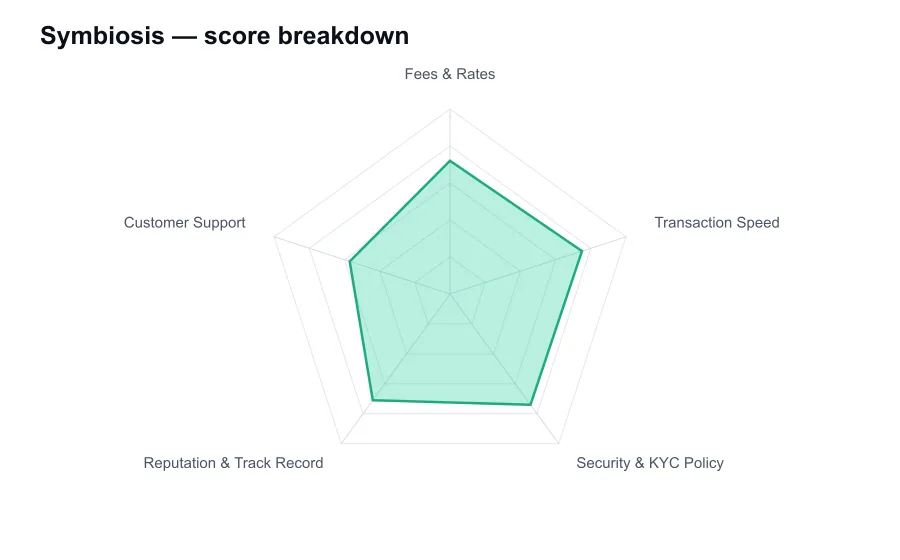
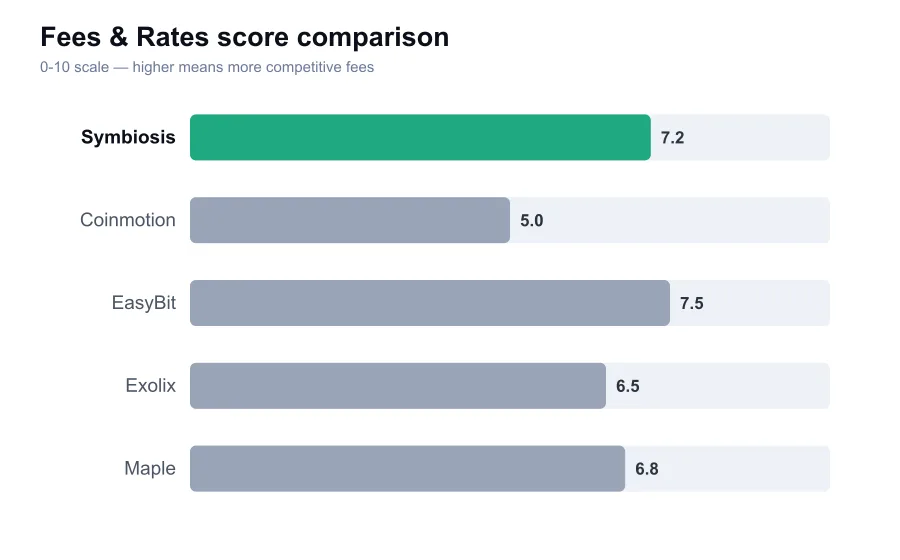
Fees are more complex here than at a single-chain decentralized exchange. The displayed result can include the liquidity-provider trading fee, the protocol's cross-chain fee where applicable, price impact, source-chain gas, destination-chain execution costs, and any bridge-related costs. In normal network conditions, Symbiosis can be competitive because it automates a route that would otherwise require several manual swaps and bridges. During congestion or on an illiquid route, the total can become expensive very quickly.
The right way to assess price is to inspect the received amount, gas estimate, and slippage setting before signing. Do not assume that a low percentage protocol fee means the transaction is cheap. Ethereum mainnet gas can dwarf every other cost on a modest trade. A route from one lower-cost EVM chain to another may be economical, while a small transfer involving Ethereum can make little sense. This is where Symbiosis is more demanding than an instant exchanger, but also more honest if the interface exposes the transaction components clearly.
Speed is route dependent. A same-chain swap is usually limited by the source chain's confirmation and execution, while a cross-chain transfer requires finality and processing across more than one network. Fast chains can make the experience feel close to immediate. Ethereum-based routes may take longer, particularly when blocks are busy. Users should resist the urge to send a second transaction simply because a cross-chain operation is not visible in the destination wallet within a few minutes.
The protocol's strongest feature is its non-custodial structure. The user connects a wallet and signs transactions rather than creating an exchange account with a password and a stored balance. There is no standard KYC gate for using a decentralized smart-contract protocol. This is meaningful privacy and access value. It does not exempt a user from laws in their jurisdiction, and it does not make wallet activity private on public chains.
Security is where the decentralized model needs a more rigorous standard than marketing copy. Smart contracts can have bugs. Bridges have repeatedly been among the most exploited pieces of crypto infrastructure. A user must trust the deployed contracts, audits, multisig or validator arrangements where relevant, oracle and liquidity assumptions, and the continued functioning of connected chains. Symbiosis has undergone security audits, which is useful evidence of effort, but an audit is a snapshot, not a guarantee against an exploit or an integration failure.
The SYMB token and governance structure are separate questions from whether the swap tool works. Governance tokens can be volatile, and protocol participation does not make the token a low-risk investment. For a user who only wants to bridge or swap, the practical focus should be route quality, token address verification, approval scope, and transaction status. There is no need to buy a governance asset just to use a decentralized routing interface.
Reputation is respectable within the cross-chain DeFi niche, but it is not comparable to the consumer familiarity of Coinbase or Kraken. Symbiosis has operated as a known protocol and has built integrations across multiple chains. Still, cross-chain projects face technical dependencies that ordinary centralized exchanges do not. A chain outage, a bridge pause, depleted liquidity, or a contract upgrade can affect a route even if the Symbiosis front end itself is reachable.
Support has the usual DeFi limitation. Documentation, community channels, explorers, and transaction tools matter more than a traditional support desk. That can be perfectly adequate for a technically fluent user who can read a transaction hash and distinguish a pending source transaction from a completed destination claim. It is poor protection for a novice who has approved the wrong token or sent funds from an unsupported wallet setup. No decentralized support channel can reverse a valid on-chain signature.
Approvals deserve special attention. Before the first ERC-20 swap, a wallet often grants a contract permission to spend a token. Users should read the wallet prompt, verify that they are on the real Symbiosis domain, and consider revoking unused permissions later. Unlimited approvals are convenient but increase exposure if a contract or connected interface is compromised. Hardware wallets, bookmarked official links, and small initial trades are sensible habits here.
Symbiosis is particularly useful for DeFi users moving stablecoins or major assets between networks without manually stitching together a bridge, wrapped token, and decentralized exchange. It is much less useful for direct fiat purchases, customer-service-heavy transactions, or people who don't understand gas. The protocol removes complexity from the route, but it cannot remove the underlying complexity of multichain settlement.
My assessment is positive, with a clear warning label. Symbiosis is more technically credible and more genuinely non-custodial than a typical instant exchanger, and that earns it stronger marks for user control. It also exposes users to a harder class of risk. For an informed wallet user, it can be an efficient cross-chain tool. For a beginner or anyone moving funds they cannot afford to have delayed by a smart-contract or bridge problem, a simpler and more established path is better.