Exolix is a non-custodial instant crypto exchanger built for direct wallet-to-wallet swaps. It is not trying to compete with Binance or Kraken as a trading terminal. Its role is narrower and useful: move from one coin, token, or network to another without leaving funds in an exchange account or learning an order-book interface.
The company has been operating since 2018, which gives it a materially better track record than many small swap sites that appear, collect traffic, and disappear. That age does not put it in the same league as the oldest regulated exchanges, but it is meaningful in a category where longevity is one of the few practical signals available to retail users.
Exolix presents both fixed-rate and floating-rate exchanges. This is a real strength because each option suits a different problem. Floating rate is usually the better choice for liquid pairs when the market is calm and the priority is price. Fixed rate is the sensible choice when a user needs certainty about the delivered amount, is settling a payment, or expects the source chain to confirm within the stated rate-lock period.
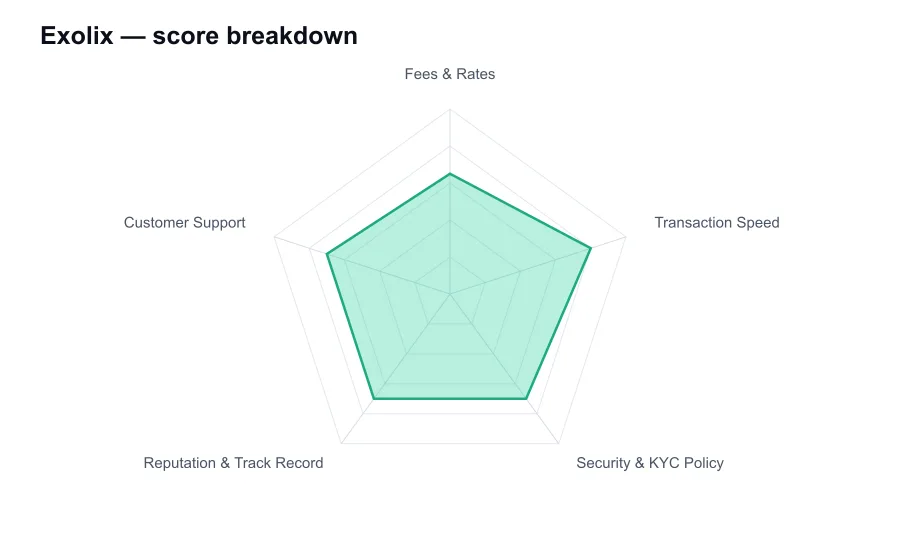
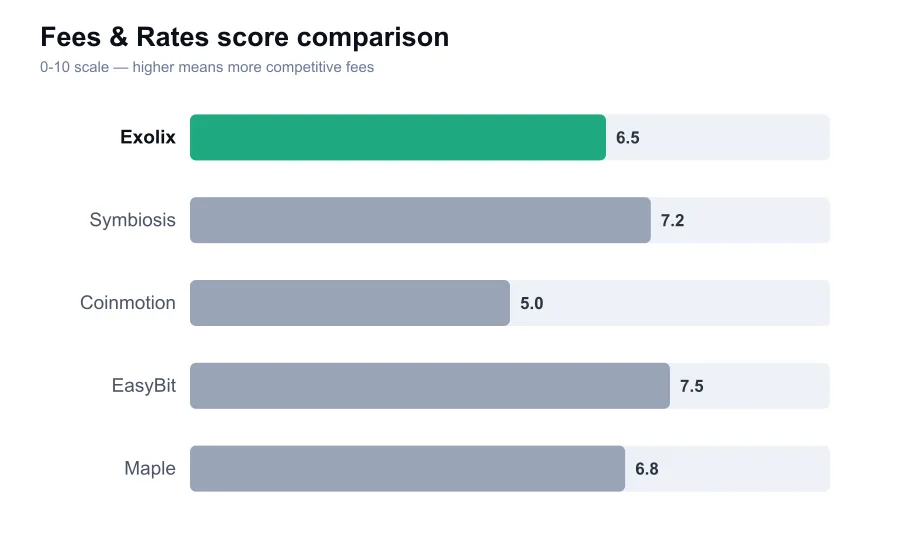
Its stated service fee is commonly presented at 0.5%, with blockchain fees and the underlying liquidity rate affecting the amount a customer ultimately receives. That is not the cheapest headline rate in the instant-swap category. EasyBit's stated 0.2% commission is lower, for example. Exolix's value lies more in broad asset coverage and a predictable exchange flow than in being the automatic price winner on every BTC or ETH conversion.
A user should be particularly alert to the distinction between the 0.5% service fee and the full quote. Any instant exchanger can show a reasonable fee while providing a less competitive execution rate due to provider spreads or thin liquidity. Exolix is often convenient for unusual asset combinations, but obscure tokens are precisely where cross-shopping is essential. The quote screen, not the marketing page, is where the cost becomes real.
Exolix supports a very broad catalog, commonly advertised in the thousands of cryptocurrencies and tokens. That breadth is useful for users moving among major assets, stablecoins, Ethereum tokens, Tron assets, and newer networks. It should not be mistaken for equal liquidity in every listing. The more obscure the asset, the more likely a user is to encounter a higher minimum, a less attractive rate, or a temporary availability issue.
Transaction speed is good for an instant exchanger. Exolix can route and complete the service side of a swap quickly after it sees the deposit, especially on fast networks. The unavoidable caveat is confirmation time. A Bitcoin deposit may wait for network confirmations, Ethereum may be slowed by gas conditions, and an underpriced transaction can sit before Exolix has any ability to process it.
The platform's non-custodial design is attractive. It does not operate like a conventional exchange account where users park balances and face the ongoing risk of a custodian holding all their assets. Exolix receives a deposit for a specific order and sends the output to the specified destination. That limits exposure, but users should still understand that the provider has temporary control of funds during the exchange.
Exolix says that it does not require registration or routine KYC for standard exchanges. That wording needs to be read carefully. It does not mean every transaction is guaranteed to remain outside compliance controls. Its terms allow requests for identification or other information where anti-money-laundering checks, sanctions screening, or suspicious activity reviews make that necessary. A user who cannot tolerate a possible hold should not send funds through any provider with this model.
On reputation, Exolix lands in the middle of the pack. It has years of operation and a recognizable profile in the instant-exchange market, which is more reassuring than a new anonymous site. User reports are mixed in the ordinary way for this category. Successful fast swaps get praise. Complaints tend to center on delayed orders, changed floating payouts during volatility, and verification requests. Those are not unique to Exolix, but they remain frustrating when money is in transit.
Support is available through round-the-clock live chat and email. For a normal transaction status query, that is usually enough. Exolix also makes transaction identifiers central to the support process, so retaining the exchange ID and deposit hash is important. I would still like to see more formal public transparency around escalation and dispute handling. Chat support can be responsive without providing the accountability that a regulated broker's complaints procedure offers.
The platform does a better job than many rivals at making the intended path clear. Pick the pair, decide on a rate, provide a receiving address, and send the deposit. The danger lies in rushing. Selecting USDT on Tron while pasting an Ethereum destination, or sending a token without the required memo or tag, can turn a quick swap into a manual recovery request.
Exolix also offers an API and affiliate-oriented tools, which indicates that it serves more than walk-in retail users. That can be useful for wallet developers and services seeking exchange functionality without building their own liquidity stack. It does not change the basic user calculation. API access is not a substitute for transparent execution quality or a strong regulated-custody framework.
My take is that Exolix is a competent choice for users who value asset variety, non-custodial swaps, and the option to lock a rate. It is not the venue I would use blindly for the cheapest possible major-coin conversion, and it is not where I would place a very large transfer without a test. Used carefully, with the quote checked against a competitor and the network verified twice, it is one of the more credible middle-tier instant exchangers.