EasyBit is a non-custodial instant exchange service aimed at people who want to swap one crypto asset for another without opening a conventional trading account. It sits in the same broad category as ChangeNOW, SimpleSwap, StealthEX, and Exolix, but its presentation is more stripped back than most. The pitch is straightforward: select a pair, send the coins, and receive the output asset at a wallet address you control.
That simplicity is EasyBit's strongest selling point. There is no order book to learn, no portfolio screen demanding attention, and no reason to keep a balance on the platform after a swap completes. For someone converting BTC to USDT, or moving from ETH to SOL for a one-off transfer, that can be much less cumbersome than funding a centralized exchange, making a trade, and withdrawing again.
EasyBit offers floating and fixed-rate routes. The distinction matters more than the interface initially suggests. A floating-rate exchange exposes the final amount to price movement between quote generation and execution. That is usually cheaper, particularly for liquid pairs, but it can disappoint users who are swapping during a sharp market move. A fixed-rate quote costs more but gives the user a defined payout if the deposit arrives within the specified time window.
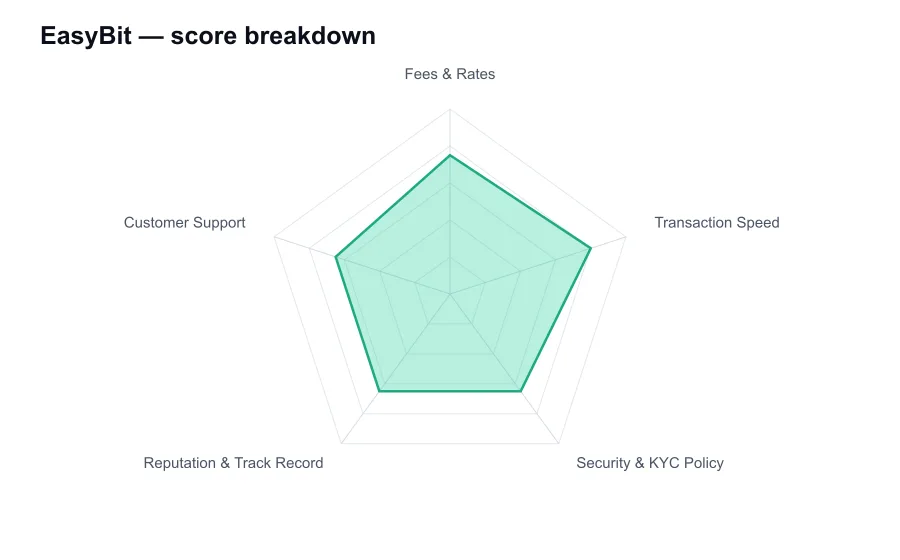
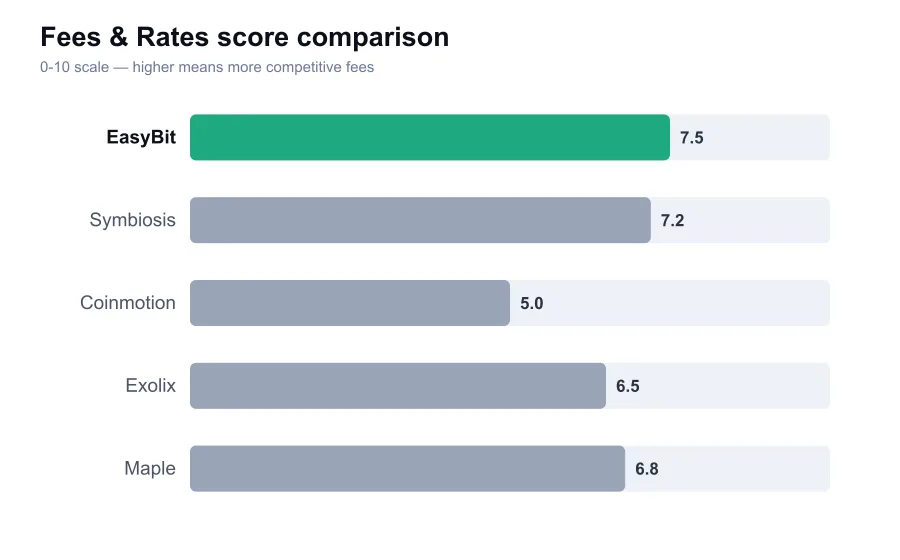
The service advertises a 0.2% commission within its exchange pricing, which looks competitive at first glance. It is lower than the explicit service fee charged by several instant swap brands. Still, a headline commission is not the full cost. EasyBit also relies on liquidity partners, so the executable rate can include a spread. The right comparison is the amount you will actually receive, not a fee figure shown before network costs and liquidity pricing do their work.
For common routes, EasyBit's quotes have generally been reasonable rather than exceptional. It can be a sensible choice for BTC, ETH, USDT, USDC, LTC, SOL, TRX, and other heavily traded assets. Less popular tokens and smaller networks are where a user should slow down. A low visible commission does not prevent a thinly traded pair from carrying a materially wider exchange spread.
Speed depends largely on the incoming asset and the destination chain. EasyBit can process an exchange quickly once it detects the deposit and receives the required confirmations, but it cannot make the Bitcoin network confirm faster or repair Ethereum congestion. Fast chains such as Tron, Solana, and many Layer 2 networks often complete quickly. Bitcoin and some token deposits can take far longer, particularly if a sender used a weak network fee.
The operational flow is standard for this type of provider. EasyBit generates a deposit address, tracks the incoming transaction, swaps through its liquidity sources, then sends the output to the address supplied by the customer. The practical risk is that the quoted rate is only meaningful if the user sends the correct asset, on the correct network, before any deadline attached to a fixed-rate order expires.
EasyBit is described as non-custodial, and that is a meaningful advantage over an exchange that holds customer balances. It does not mean the service is trustless. During the active exchange, EasyBit and its partners control the process and may need to investigate an order. Users are still trusting a company to send the correct output, manage its liquidity, and respond properly if a transaction is delayed.
The platform follows a risk-based compliance model rather than promising that verification can never happen. Many routine swaps can be completed without account registration or identity documents, but suspicious activity, sanctions concerns, transaction monitoring alerts, or a partner compliance request can lead to a review. That is common in this sector, though providers often communicate it too vaguely. Anyone who needs a guaranteed no-document route should not assume any instant exchanger can provide one.
This is also where EasyBit's security score has to remain measured. The site supports the privacy and convenience users expect from a non-custodial exchanger, but it has not built the public institutional track record of Coinbase or Kraken. There is less detailed public reporting on custody architecture, insurance, financial controls, and formal audits than you would expect from a large regulated exchange. That does not make it unsafe by default. It does mean the user has less independently verifiable information to rely on.
Its public reputation is decent but comparatively modest. EasyBit has been active for years and has accumulated user feedback across review platforms, which is better evidence than a new site with polished marketing and no operating history. The recurring praise is for a simple interface and completed swaps. The recurring complaints are familiar to the instant-exchange category: a changed payout after market movement, a delay while a transaction is reviewed, or frustration when a sender used the wrong chain.
Customer support is available around the clock through live chat and email channels. In normal cases, that is enough because most questions concern a transaction ID, required confirmations, or the current status of an order. The quality test is a problematic swap, not a routine one. EasyBit's support appears serviceable, but it does not have the extensive escalation structure, telephone coverage, or local regulatory complaint channels associated with major licensed exchanges.
The mobile experience is browser-based. That is fine for checking an order from a phone, and perhaps preferable to installing another wallet-connected app, but it also means EasyBit is not a substitute for a full trading platform. There are no sophisticated charting tools, conditional orders, yield products, or deep portfolio controls here. It is a conversion utility.
My view is that EasyBit is a credible option for small to medium self-custody swaps where speed and a clean workflow matter more than extracting the final basis point from a trade. Check its final quote against at least one rival, use fixed rate when the market is moving violently, and never send funds before verifying the selected network. For recurring trading, large transfers, or situations where a formal compliance relationship matters, Kraken, Coinbase, or a regulated local exchange is the stronger choice.