Report Chain logo Report Chain

Satoshitango

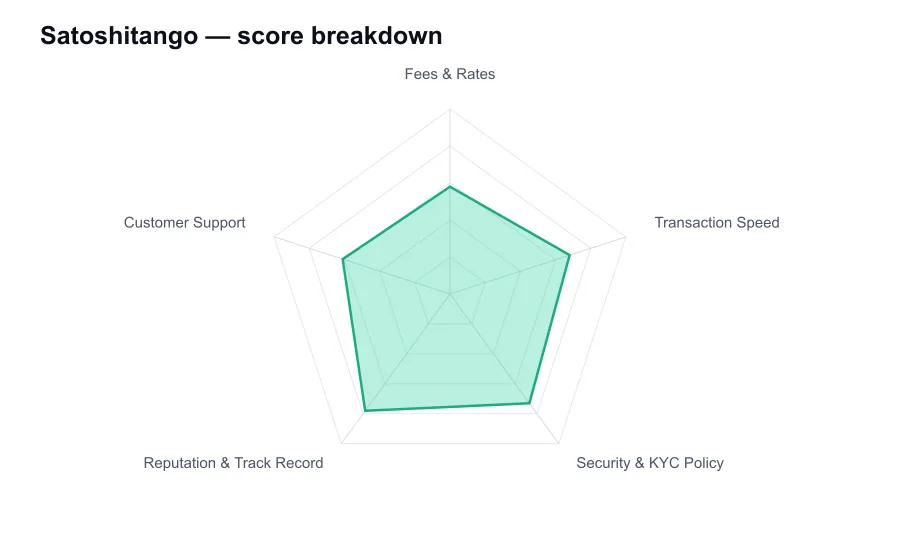
Satoshitango scores 6.8/10 overall in our independent review, measured against every other provider we've compared, strongest on Reputation & Track Record (7.8/10) and weakest on Fees & Rates (5.8/10).

Visit official site
Status: active (checked 2026-10-13T18:20:33.012Z)

Editorial independence: our scores and rankings are produced using the fixed criteria above and are not influenced by advertisers. This is an independent ranking site and is not operated by, or affiliated with, any provider we list.

Affiliate disclosure: some links on this page may earn us a commission at no extra cost to you. This does not affect our rankings.

Quick Verdict
SatoshiTango has earned credibility through survival and local relevance, not through chasing every global crypto trend. That is a strength. It offers a practical route into mainstream crypto for customers who value Argentine payment integration and a known domestic name. Its pricing is unlikely to satisfy a trader obsessed with spreads, and support may test patience in complicated fiat cases. For ordinary local use, it is a sensible platform if you treat it as an access point rather than a permanent vault.
  • Best for: Established Argentine provider since 2014
  • Best for: Built around local crypto and payment use cases
  • Best for: Straightforward app for mainstream assets
  • Best for: Useful regional alternative to global exchanges
  • Not for: Effective trading cost can include spread
  • Not for: Mandatory verification and fiat reviews
  • Not for: Limited appeal for advanced or altcoin traders
Market snapshot
AssetPrice (USD)24h change
Bitcoin (BTC)$81,809+0.87%
Ethereum (ETH)$2,396.01+1.27%
Tether (USDT)$0.9992+0.01%
BNB (BNB)$725.91+1.94%
Solana (SOL)$103.79+1.58%
XRP (XRP)$1.3+1.97%

Market data via CoinGecko, for informational purposes only. Not financial advice.

What is Satoshitango?

SatoshiTango is a centralized Argentine crypto platform founded in 2014. It offers verified customers a way to buy, sell, hold, and transfer cryptocurrencies through a service aimed at local payment and consumer use cases. Assets kept in its account balance are held under the platform's custodial model.

How Satoshitango Works

  1. Create an account and complete identity verification
  2. Fund the account through an available local method or crypto deposit
  3. Select a crypto purchase, sale, or transfer
  4. Review the final quote and confirm the transaction
  5. Withdraw supported crypto to a personal wallet if needed

Criteria Breakdown

Scoring breakdown for Satoshitango
Criterion Score Note
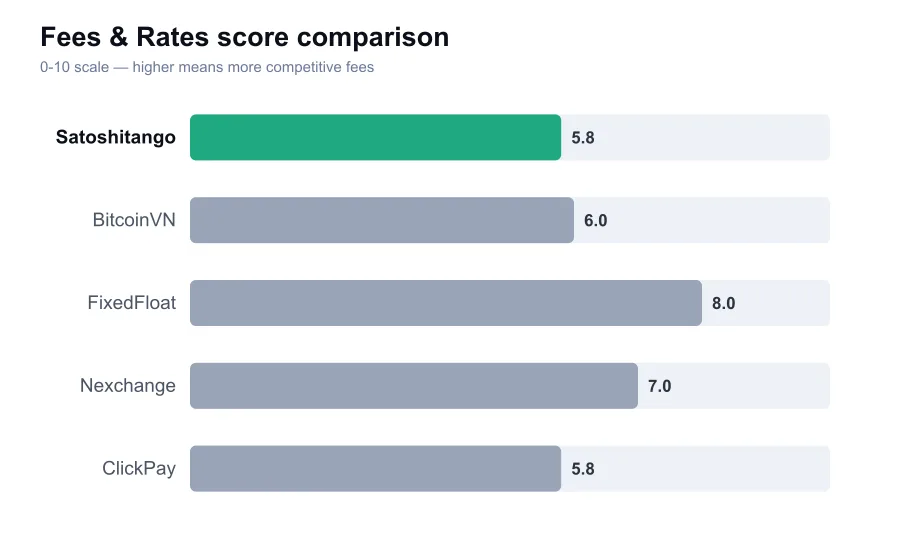
Fees & Rates 5.8 Convenience is useful, but quote spreads need checking.
Transaction Speed 6.8 Crypto is prompt, local fiat rails can vary.
Security & KYC Policy 7.3 Verified centralized service, so custody risk remains.
Reputation & Track Record 7.8 Argentine provider operating since 2014.
Customer Support 6.1 Official support exists, complex cases can be slow.

Key Facts

Key facts for Satoshitango
Fact Value Source
Founded 2014 Source
Primary market Argentina and Latin America Source
Service model Centralized crypto and payment platform Source
Account type Verified custodial account Source
Core use Buy, sell, hold and transfer crypto Source

Review of Satoshitango

SatoshiTango is an Argentine crypto platform that has spent years serving users who need a practical connection between local money, crypto, and everyday payments. It is not trying to be a universal trading powerhouse. Its identity is closer to a regional fintech with crypto rails, offering buying and selling, custody, transfers, and services that make sense in a country where access to dollar-linked value and alternative payment methods has persistent appeal.

The company has operated since 2014, which puts it among the older names in Argentina's retail crypto scene. Longevity is especially meaningful in this market. Local payment rules, foreign exchange restrictions, inflation, and banking relationships can change quickly. A provider that stays operational through those changes has learned things that a foreign platform entering the country may take years to understand.

SatoshiTango's interface is built for usability rather than trading sophistication. A customer can open a verified account, add funds through available local methods, purchase crypto, send assets, and manage a balance without learning advanced order types. That is a sensible product decision. Most of its target users are not looking to scalp a BTC perpetual contract, they are looking for a workable way to buy Bitcoin or hold stablecoins.

The cost of that convenience should be examined closely. Like many brokerage-style crypto apps, SatoshiTango's effective charge can appear through the conversion quote, spread, payment method fees, and withdrawal costs instead of a single headline trading commission. This is not automatically a bad deal. A local user may reasonably pay more for a reliable fiat bridge. But it does mean that the displayed market price is not the number to use for comparison.

Before making a larger trade, compare the number of coins you will receive with Ripio, Lemon, Buenbit, Bitso, and Binance if each is available to you. The difference can be small on a modest purchase and substantial on recurring stablecoin conversions. This is particularly important for Argentine users using crypto as a savings tool. A repeated spread is a real ongoing cost, even if each individual purchase feels effortless.

Speed is often good for internal account actions and blockchain transfers once everything is verified. Fiat processing can be less predictable. Local bank transfers, payment-provider checks, daily limits, and anti-fraud controls all affect whether a deposit or withdrawal feels instant. That is not unique to SatoshiTango, but its marketing should not be read as a promise that every peso movement will settle immediately at every hour.

Identity verification is part of the service. SatoshiTango operates as a centralized provider connected to local payments, so users should expect to provide personal information and potentially additional documentation as activity or local compliance rules require. That excludes users seeking anonymous crypto access. It also helps explain why the service can offer a more integrated experience than a self-custody wallet with no local banking relationship.

Security starts with the usual centralized-exchange question: how much money should you leave there? SatoshiTango can be useful for buying, selling, and spending, but a customer does not control the private keys to assets held in the platform balance. For a modest operational balance, that may be a practical compromise. For savings that would cause serious harm if inaccessible, self-custody is the stronger default.

The platform's age is its best reputational asset. Since 2014, it has built recognition in Argentina and has remained visible while many local crypto services have been absorbed, renamed, or simply faded away. It does not have the global brand force of Coinbase, Kraken, or Binance. It does have a more relevant record for someone who values an Argentina-focused provider that understands local user behavior.

Customer support is a mixed area. SatoshiTango offers official support channels and educational material, but cases involving banking details, account verification, compliance controls, or a missing transfer can require patience. This is where a regional platform earns or loses loyalty. A customer may accept a fee if the platform solves a local payment issue quickly. They will not accept silence when their money is waiting in a review queue.

Its product range has traditionally extended beyond a bare crypto trading screen, with payment-oriented features forming part of the appeal. That can make SatoshiTango more useful than a pure exchange for someone who wants crypto tied to day-to-day financial activity. It can also create complexity. Each extra funding, card, or bill-payment feature has its own fees, availability rules, and operational dependencies. Read the current terms for the exact service you intend to use.

Asset selection is adequate for mainstream users but not a reason to choose the platform over a global exchange. Bitcoin, Ether, and major stablecoins are the important assets here. If your plan relies on newly launched tokens, deep DeFi access, or an unusual blockchain network, a specialized exchange or a self-custody wallet will likely serve you better. SatoshiTango's value is local practicality, not token maximalism.

I would be careful with expectations around fiat-to-crypto timing. Fund the account before you urgently need to make a purchase, particularly around weekends, holidays, or periods of intense market volatility. Keep records of transfer receipts and transaction IDs. Those habits sound mundane, but they make support cases much easier when a payment provider and a blockchain explorer are telling different parts of the story.

SatoshiTango is a credible regional choice for the right user. Its longstanding presence and local orientation make it more compelling than an unfamiliar app offering a flashy promotion. The trade-off is that it may not be the lowest-cost or most technically advanced place to trade. Use it for accessible local service and routine crypto access, while keeping large holdings under your own control and checking the final quote before every meaningful conversion.
Pros & Cons

Pros and cons of Satoshitango
Pros Cons
Established Argentine provider since 2014 -
Built around local crypto and payment use cases -
Straightforward app for mainstream assets -
Useful regional alternative to global exchanges -

Verdict

SatoshiTango has earned credibility through survival and local relevance, not through chasing every global crypto trend. That is a strength. It offers a practical route into mainstream crypto for customers who value Argentine payment integration and a known domestic name. Its pricing is unlikely to satisfy a trader obsessed with spreads, and support may test patience in complicated fiat cases. For ordinary local use, it is a sensible platform if you treat it as an access point rather than a permanent vault.

KYC

Requirement mandatory
Notes SatoshiTango uses verified accounts because it provides centralized custody and interfaces with fiat payment methods. Documentation requirements can increase for certain activity.

Supported Assets

Notable Coins: Bitcoin, Ethereum, USDT, USDC, DAI

How to Use Satoshitango Safely

  • Use a unique password and enable available account protection
  • Verify the official SatoshiTango website before logging in
  • Confirm wallet addresses and blockchain networks before withdrawal
  • Save fiat transfer receipts and crypto transaction IDs
  • Withdraw long-term holdings to a wallet you control

Mobile App

iOSYes
AndroidYes
NotesSatoshiTango provides mobile access for customer account and crypto activity.

Frequently Asked Questions

When did SatoshiTango begin operating?

SatoshiTango has operated since 2014, making it one of the longer-running consumer crypto providers associated with the Argentine market.

Do I need to verify my identity at SatoshiTango?

Yes. SatoshiTango is a centralized service connected to fiat payment methods, so account verification is required and further documents may be requested.

Why can the crypto amount received differ from a reference price?

Your effective price can include spread, payment method charges, liquidity conditions, and market movement. Review the final quote before confirming.

Should I keep a large Bitcoin balance on SatoshiTango?

For long-term savings, self-custody is generally safer because platform balances are custodial. Keep only the operational amount you need on a centralized service.

Why is my local-currency funding transaction pending?

Bank and payment-provider processing, account checks, anti-fraud controls, and transfer timing can delay fiat funding even where blockchain transfers are working normally.

Is SatoshiTango designed for active day trading?

It is better suited to accessible retail buying, selling, and payment-related use. Traders needing deep order books, advanced orders, or derivatives should use another venue.

Editorial independence: our scores and rankings are produced using the fixed criteria above and are not influenced by advertisers. This is an independent ranking site and is not operated by, or affiliated with, any provider we list.

Affiliate disclosure: some links on this page may earn us a commission at no extra cost to you. This does not affect our rankings.

About the Author

Yvette Saran Crypto Exchange Research Editor
  • 8 years in fintech and payments journalism
  • Crypto exchange testing and fee analysis
  • Former consumer finance reporter
  • Contributor to digital asset custody research

Yvette Saran is a crypto exchange researcher and former payments journalist with eight years of experience covering trading platforms, custody, and consumer finance. She reviews exchanges by testing the parts users actually feel, from order execution and withdrawal friction to fee disclosures and support quality.

Satoshitango score breakdown by criterion, shown as a radar chart
Score breakdown
Satoshitango fees score compared against similar providers
Fees vs. alternatives
Illustrative swap flow preview for Satoshitango - not an actual product screenshot
Illustrative swap flow preview

Alternatives to Satoshitango

Alternatives to Satoshitango
AlternativeScore
BitcoinVN Review6.8/10
FixedFloat Review6.7/10
Nexchange Review6.7/10
ClickPay Review6.9/10
Godex Review6.9/10
Maple Review7.0/10