Report Chain logo Report Chain

FixedFloat

FixedFloat scores 6.7/10 overall in our independent review, measured against every other provider we've compared, strongest on Transaction Speed (8.5/10) and weakest on Security & KYC Policy (5.0/10).

Visit official site
Status: active (checked 2026-10-13T18:06:27.488Z)

Editorial independence: our scores and rankings are produced using the fixed criteria above and are not influenced by advertisers. This is an independent ranking site and is not operated by, or affiliated with, any provider we list.

Affiliate disclosure: some links on this page may earn us a commission at no extra cost to you. This does not affect our rankings.

Quick Verdict
FixedFloat is one of the more usable instant exchangers because its two pricing modes solve a real problem and the swap flow is uncomplicated. The 0.5% floating fee is competitive, while the 1% fixed option can be justified when price certainty matters. Its public security history prevents a stronger recommendation. Use it for controlled, short-lived swaps, verify every network carefully, and do not confuse convenience with the safeguards of a major custodial exchange.
  • Best for: Choice of floating and fixed-rate swaps
  • Best for: Clearly stated 0.5% and 1% service fees
  • Best for: No account needed for ordinary swaps
  • Best for: Quick settlement on liquid routes
  • Not for: 2024 security incident damaged trust
  • Not for: No regulated-exchange level of recourse
  • Not for: Fixed rate costs twice the floating fee
  • Not for: KYC or transaction holds can still occur
Market snapshot
AssetPrice (USD)24h change
Bitcoin (BTC)$81,809+0.87%
Ethereum (ETH)$2,396.01+1.27%
Tether (USDT)$0.9992+0.01%
BNB (BNB)$725.91+1.94%
Solana (SOL)$103.79+1.58%
XRP (XRP)$1.3+1.97%

Market data via CoinGecko, for informational purposes only. Not financial advice.

What is FixedFloat?

FixedFloat is an instant cryptocurrency exchange service for wallet-to-wallet swaps. It lets users exchange supported crypto assets without opening a conventional trading account. Customers can choose a floating market rate or pay more for a fixed quote.

How FixedFloat Works

  1. Choose the asset pair and the rate type
  2. Enter the receiving wallet address
  3. Review the quoted amount and generated deposit address
  4. Send the exact deposit amount before the quote window expires
  5. Track the order using the transaction page and order ID
  6. Receive the converted asset in the destination wallet

Criteria Breakdown

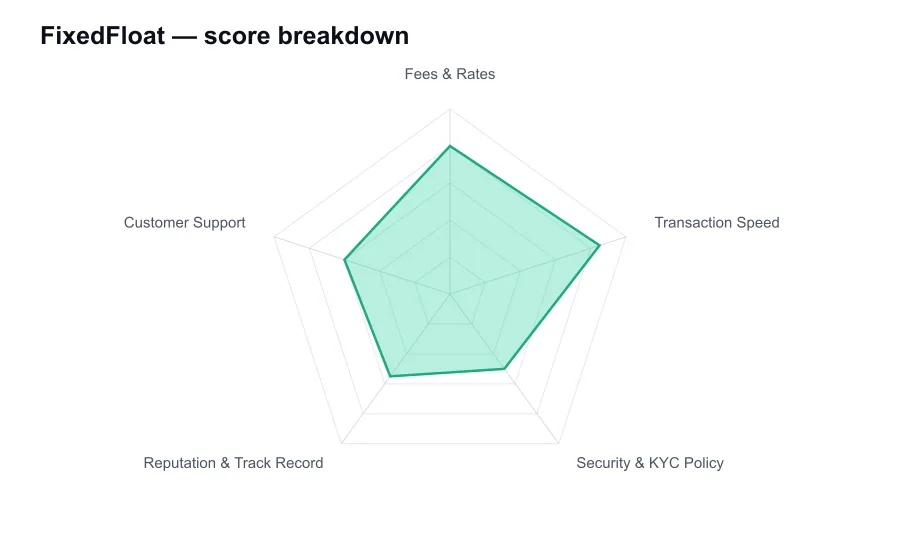
Scoring breakdown for FixedFloat
Criterion Score Note
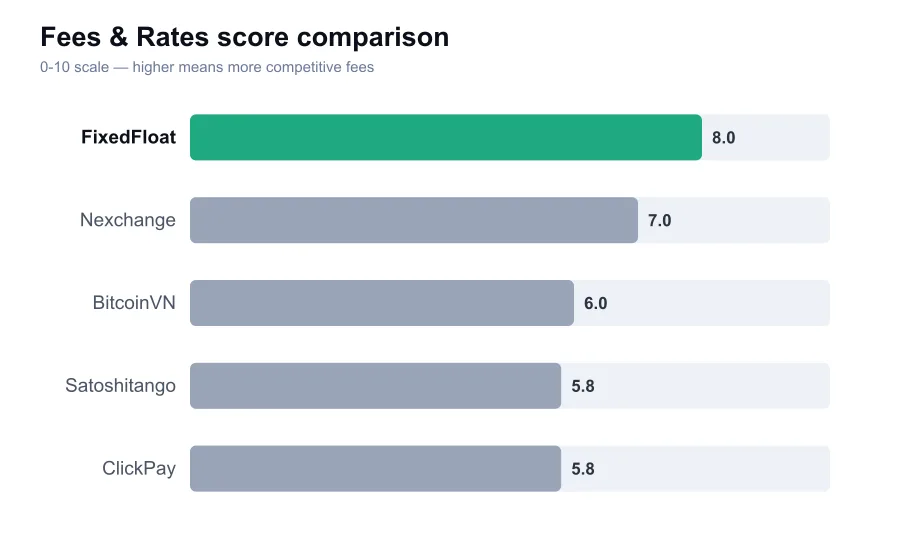
Fees & Rates 8.0 0.5% floating fee and 1% fixed-rate fee, plus network costs
Transaction Speed 8.5 Fast execution for liquid pairs after blockchain confirmations
Security & KYC Policy 5.0 No routine KYC, but 2024 security concerns hurt confidence
Reputation & Track Record 5.5 Established brand, with a serious public incident in 2024
Customer Support 6.0 Order tracking and chat help, but limited escalation options

Key Facts

Key facts for FixedFloat
Fact Value Source
Floating-rate fee 0.5% Source
Fixed-rate fee 1% Source
Account required No for ordinary swaps Source
Rate modes Floating and fixed Source
Service model Instant wallet-to-wallet swaps Source
Support access Website chat and order ID tracking Source

Review of FixedFloat

FixedFloat is one of the better-known accountless instant swap services. It sits in the same broad category as ChangeNOW, SimpleSwap, StealthEX and Godex, but has historically stood out for two reasons: a clean interface built for fast execution, and a choice between floating and fixed exchange rates. For people who already hold crypto in a self-custody wallet and simply need to convert one asset into another, that is a useful proposition.

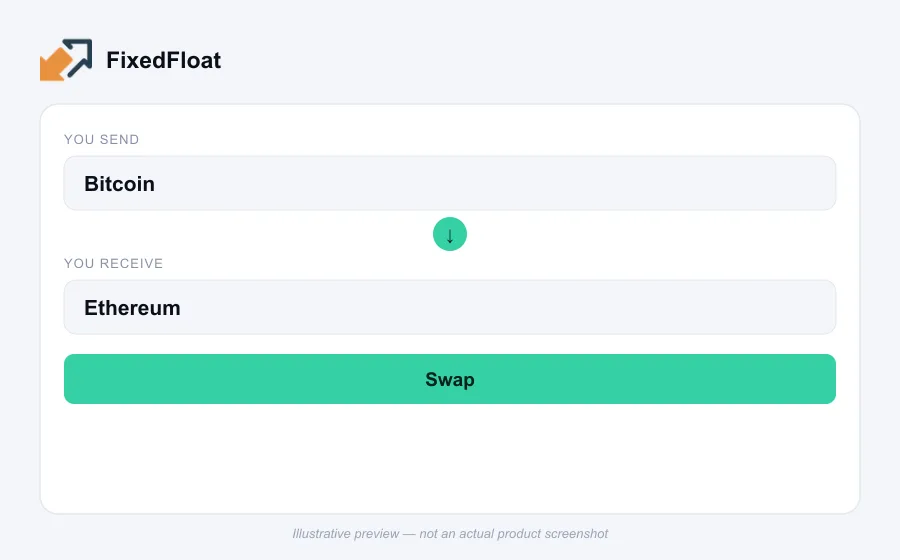
The service is not a conventional exchange. You do not open an order book, deposit into a trading balance, or place a limit order. You pick an asset pair, enter the receiving address, send coins to a generated deposit address, and wait for the swap to settle. That makes FixedFloat convenient for one-off conversions, but it also means users give up the protections and tools available on a regulated centralized exchange.

Fees are one of FixedFloat's stronger points, especially for users who understand the difference between its two rate modes. The floating-rate option has generally carried a 0.5% service fee, while the fixed-rate option has generally charged 1%. Network fees are added separately. That is not the cheapest possible arrangement, but it is transparent enough for a non-custodial style swap service.

The floating option is the better value if the market is calm and the pair is liquid. The quoted result can move while the transaction confirms, so there is real slippage risk with Bitcoin, Ethereum and congested networks. Fixed rate costs more, but it locks the quoted outcome for a limited window. For a larger transfer or a volatile market, paying the extra half percent can be sensible insurance.

FixedFloat's rate display has usually been more direct than services that bury their spread inside an attractive headline quote. Still, users should compare the actual amount received, not just the advertised fee. A 0.5% service charge does not guarantee the best execution. Liquidity sources, network costs and pair-specific spreads matter, and a quick comparison with ChangeNOW or an exchange withdrawal can reveal meaningful differences.

Speed is another genuine strength. Most straightforward swaps settle after the required blockchain confirmations and the provider's liquidity partner completes the conversion. For liquid pairs, that can mean a few minutes on fast networks and roughly 15 to 45 minutes for many Bitcoin-related transactions. Fixed-rate swaps can feel especially quick because the route is selected before the customer sends funds.

That said, no instant exchanger can override a blockchain. Bitcoin deposits may take longer during fee spikes, Ethereum transfers can be delayed by gas congestion, and unusual token routes can need manual attention. A customer who expects every swap to finish in five minutes will eventually be disappointed. FixedFloat is fast by instant-exchange standards, not magically immune to the conditions of the chains it uses.

The security story requires a less relaxed assessment. FixedFloat does not normally require registration or identity verification for ordinary swaps, which appeals to privacy-minded users. But the service is still a centralized intermediary during the conversion. It controls the deposit address and execution process. Users are trusting it with funds for the duration of each transaction, even if it does not maintain a traditional account balance.

That trust was tested badly in 2024, when blockchain investigators linked a large theft involving FixedFloat-controlled wallets to suspicious outflows. Reports connected the incident to thefts associated with the DMM Bitcoin breach. The company disputed characterizations around the event and referred to a security incident, but the public record was troubling. A service handling fast, anonymous conversions needs to communicate clearly in a crisis, and FixedFloat did not emerge with an unblemished record.

Its no-registration design also has a practical downside. FixedFloat's terms reserve the right to request information or pause a transaction where anti-money-laundering checks are triggered. That is standard for this sector, but users should not mistake "no account" for an absolute guarantee that a swap cannot be reviewed or delayed. Sending funds tied to sanctions, fraud reports or risky blockchain activity is a particularly bad idea.

FixedFloat's support has generally been accessible through its website chat and email-style ticket channels, and its transaction pages give users an order ID that support can trace. For normal delayed-confirmation cases, that is usually enough. The weakness is that there is no telephone escalation, no formal dispute process comparable to a regulated exchange, and little comfort if a high-value swap becomes contentious.

The platform supports a broad selection of major coins, stablecoins and token networks, which makes it practical for common wallet-to-wallet conversions. BTC, ETH, LTC, XMR, SOL and USDT are among the assets users commonly look for. Network selection deserves close attention, particularly with USDT and USDC. Sending a token through the wrong chain to a generated address can turn a simple swap into an expensive support case.

I would also avoid using FixedFloat as a place to route the proceeds of a large sale immediately after purchase. Test the destination address with a small amount first. Save the order ID, transaction hash and original quote. If the transaction involves a large sum, consider whether a regulated venue with a named legal entity, account controls and stronger customer recourse is the wiser choice.

FixedFloat remains useful because it is quick, accountless and easy to understand. Its rate options are genuinely helpful, and its listed fee structure is clearer than many competitors'. Yet the security incident and thin customer recourse keep it from being a service I would use casually for large balances. It is a tool for a specific job, short-term wallet-to-wallet swaps, not a provider to trust with money you cannot afford to have delayed or disputed.
Pros & Cons

Pros and cons of FixedFloat
Pros Cons
Choice of floating and fixed-rate swaps -
Clearly stated 0.5% and 1% service fees -
No account needed for ordinary swaps -
Quick settlement on liquid routes -

Verdict

FixedFloat is one of the more usable instant exchangers because its two pricing modes solve a real problem and the swap flow is uncomplicated. The 0.5% floating fee is competitive, while the 1% fixed option can be justified when price certainty matters. Its public security history prevents a stronger recommendation. Use it for controlled, short-lived swaps, verify every network carefully, and do not confuse convenience with the safeguards of a major custodial exchange.

KYC

Requirement optional
Notes Routine swaps are usually accountless. FixedFloat may request information or pause a transaction if compliance or risk controls are triggered.

Supported Assets

Notable Coins: Bitcoin, Ethereum, Litecoin, Monero, Solana, USDT, USDC
Networks: Bitcoin, Ethereum, Tron, Solana

How to Use FixedFloat Safely

  • Compare the receiving amount with at least one competing quote
  • Confirm the token network before sending any stablecoin
  • Test a new destination wallet with a small transaction
  • Save the order ID, deposit hash and quoted amount
  • Do not send funds linked to suspicious or sanctioned activity

Frequently Asked Questions

What does FixedFloat charge?

FixedFloat has generally listed a 0.5% fee for floating-rate exchanges and 1% for fixed-rate exchanges. Blockchain network fees are separate and can materially affect small swaps.

Does FixedFloat require KYC?

Ordinary swaps are generally accountless and do not require routine KYC. Its terms allow compliance checks and information requests for transactions flagged by risk controls.

What happened to FixedFloat in 2024?

Blockchain investigators linked suspicious outflows from FixedFloat wallets to a major 2024 theft. FixedFloat described the matter as a security incident and disputed some public characterizations.

What is the difference between floating and fixed rates?

A floating swap uses the market rate at execution and is generally charged 0.5%. A fixed swap locks the quoted result for a limited payment window and generally costs 1%.

Can I send USDT on any network?

No. You must select the same supported network shown in the swap form. USDT exists on several chains, and sending on an unselected chain can result in loss or a difficult recovery request.

How long do Bitcoin swaps take?

Timing depends on Bitcoin confirmations, network fees and liquidity routing. A normal liquid swap may finish in roughly 15 to 45 minutes, but congested conditions can take longer.

Editorial independence: our scores and rankings are produced using the fixed criteria above and are not influenced by advertisers. This is an independent ranking site and is not operated by, or affiliated with, any provider we list.

Affiliate disclosure: some links on this page may earn us a commission at no extra cost to you. This does not affect our rankings.

About the Author

Yvette Saran Crypto Exchange Research Editor
  • 8 years in fintech and payments journalism
  • Crypto exchange testing and fee analysis
  • Former consumer finance reporter
  • Contributor to digital asset custody research

Yvette Saran is a crypto exchange researcher and former payments journalist with eight years of experience covering trading platforms, custody, and consumer finance. She reviews exchanges by testing the parts users actually feel, from order execution and withdrawal friction to fee disclosures and support quality.

FixedFloat score breakdown by criterion, shown as a radar chart
Score breakdown
FixedFloat fees score compared against similar providers
Fees vs. alternatives
Illustrative swap flow preview for FixedFloat - not an actual product screenshot
Illustrative swap flow preview

Alternatives to FixedFloat

Alternatives to FixedFloat
AlternativeScore
Nexchange Review6.7/10
BitcoinVN Review6.8/10
Satoshitango Review6.8/10
ClickPay Review6.9/10
Godex Review6.9/10
Alfacash Review6.5/10