Pegasusswap is a name that requires more caution than familiarity. Publicly available information does not establish a clear, widely recognized exchange operator, verified official domain, leadership team or durable product record comparable with Morpho, Nexo or even established instant-swap services. That lack of clarity is the central fact a prospective user should take seriously. In crypto, an obscure name and a slick swap interface are not evidence of a functioning, trustworthy exchange.
The name is also easy to confuse with unrelated projects using Pegasus or Pegasys branding. That creates a phishing risk before any trading risk enters the picture. A user searching for Pegasusswap could land on a cloned interface, an abandoned contract, a promotional page or an unrelated project. I would not send funds until the exact domain, official social accounts, contract addresses and current documentation were independently cross-checked from several reliable sources.
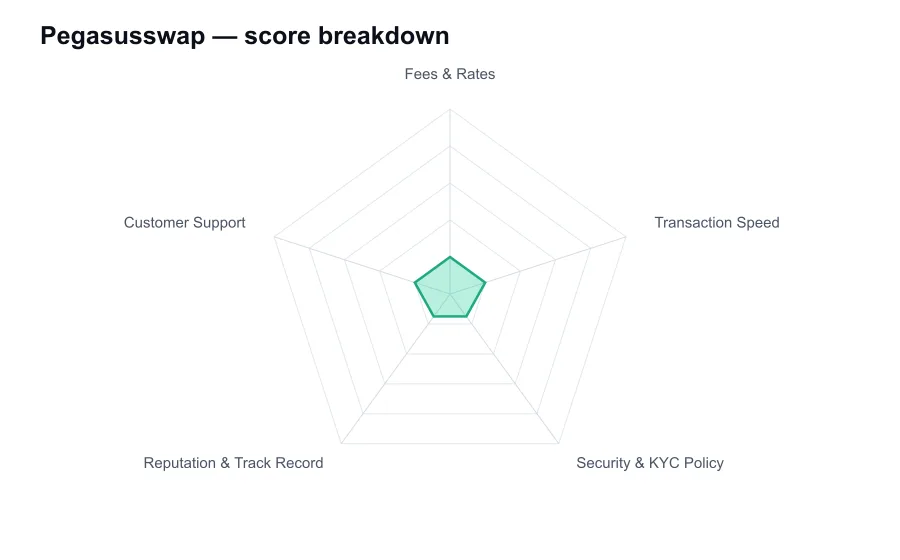
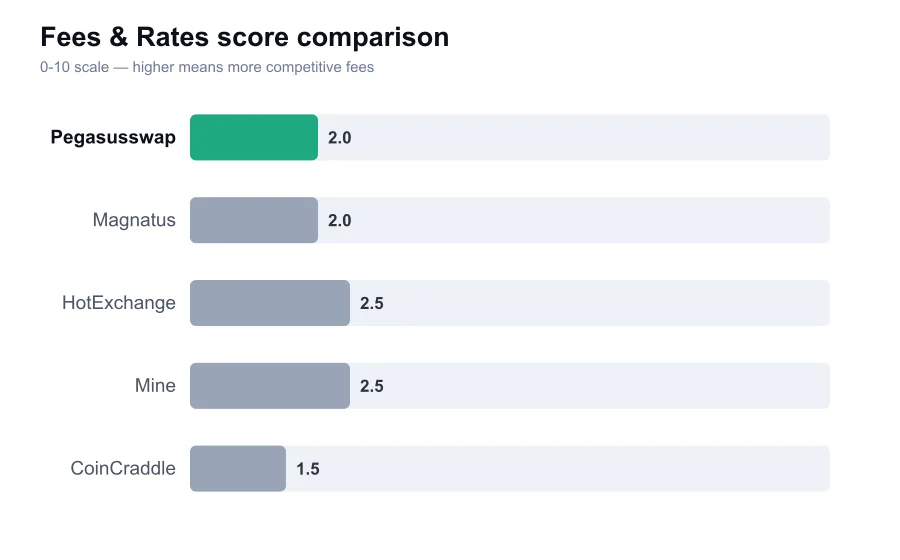
I cannot verify a current official fee schedule for an entity specifically called Pegasusswap. That means there is no responsible basis for claiming a maker fee, swap percentage, withdrawal charge or spread is competitive. This is not a minor disclosure gap. Fees are one of the easiest facts for an exchange to publish. If a service does not clearly show the quoted input, expected output, network fee and any protocol fee before confirmation, users should walk away.
Speed is equally impossible to score generously without knowing what actually processes the transaction. A decentralized automated market maker settles according to its host chain and liquidity pool. An instant exchanger depends on deposit confirmations and its own payout operation. A centralized exchange may show an internal balance instantly while withdrawals wait for review. Pegasusswap's unclear operating model prevents a buyer from knowing which of these risks they are accepting.
For a genuine decentralized exchange, the core question would be contract security and liquidity. Are contracts verified on the relevant block explorer? Has the code been audited by a reputable firm? Is there a timelock on administrative changes? Who controls upgrade keys, fee switches or liquidity incentives? Without credible answers, a token approval can be more dangerous than the swap itself. Unlimited approvals have repeatedly turned obscure DeFi interfaces into costly traps.
For a custodial or instant-exchange interpretation of Pegasusswap, the questions are different but no less demanding. Who is the legal operator? Where is it registered? What custody arrangements exist? What happens if a transfer is flagged or the service halts? I could not establish transparent, authoritative answers to those basic points. A provider should not earn trust merely because it promises no registration or displays a favorable exchange rate.
The absence of a well-documented KYC policy is also a concern, rather than a privacy benefit. A legitimate provider may use no KYC for a noncustodial protocol, may require it for a regulated account, or may use clear risk-based checks for an instant exchange. Each model can be explained plainly. An unclear policy leaves users unable to predict whether a transaction will complete normally or become a frozen-funds dispute after deposit.
Reputation is where Pegasusswap falls furthest short. I found no basis to place it in the same trust category as long-running platforms with public leadership, legal disclosures, independently reviewable smart contracts or extensive user history. Small projects can be honest, and a lack of press does not prove fraud. But money should not be allocated on the hope that an undocumented service is honest. The burden of proof belongs to the operator, not the customer.
Support is impossible to assess confidently without a stable, verified customer channel and a public record of issue handling. A Discord server or Telegram account is not adequate evidence of customer protection, particularly because impersonators are common and direct-message scams are routine. Legitimate support will never need a seed phrase, private key or wallet recovery phrase. Any account that asks for one is attempting theft.
There is a difference between taking a calculated DeFi risk and taking an information risk. In DeFi, an experienced user may decide that a known contract's audit history, liquidity depth and admin controls are acceptable. With Pegasusswap, the first hurdle is establishing what product exists and who operates it. Until that hurdle is cleared, measuring annualized return, slippage or token incentives is premature. The safest trade is the one that is not initiated.
Users who are still determined to investigate should begin with observation, not a deposit. Find the purported contract on the official block explorer, verify it is linked from more than one authentic project channel, inspect whether source code is verified, and review holders and liquidity. Check whether the pool has meaningful locked or independently verifiable liquidity. Even then, do not assume a lock makes a project safe, since malicious token mechanics can exist separately from liquidity removal.
A tiny test transaction can reduce operational risk, but it cannot solve smart-contract or counterparty risk. A scam may process a small swap correctly and steal the larger follow-up transaction. Never approve an unlimited amount of a valuable token for an unverified application. Use a separate wallet containing only the amount intended for testing, and revoke approvals immediately afterward. This is basic compartmentalization, not paranoia.
There are far better-established alternatives for almost every possible use case. If the goal is a noncustodial swap, use a DEX with verifiable contracts, deep liquidity and a long public history on the relevant chain. If the goal is a quick conversion, use a known instant exchanger after comparing rates. If the goal is trading and fiat access, choose a licensed centralized exchange available in the user's jurisdiction. Pegasusswap offers no demonstrated advantage that compensates for the disclosure deficit.
My recommendation is blunt: do not treat Pegasusswap as a verified exchange provider until its official identity, current domain, fee policy, security documentation and operating history can be independently established. There may be a legitimate project behind the name, but the available evidence is too thin to recommend it responsibly. A low score here is not an accusation of criminal conduct. It is the correct response to an exchange asking users to take financial risk without supplying enough verifiable information to evaluate that risk.