Lizex is a name that still appears in older exchange directories and archived listings, but it does not have the kind of current, independently verifiable public presence that a reader should demand before depositing funds. That changes the review immediately. A crypto venue is not judged only by its claimed trading pairs or promotional language. It has to show a functioning platform, current legal information, reliable withdrawal evidence, and accessible support. Lizex does not clear that basic bar today.
The most sensible way to assess Lizex is as an unverified legacy centralized exchange brand rather than an active recommendation. Historic exchange listings described it as a trading platform, yet a historical listing is not proof that the service remains operational, solvent, licensed, or safe. Crypto is full of abandoned domains and dormant brands whose old search results can look more reassuring than they are.
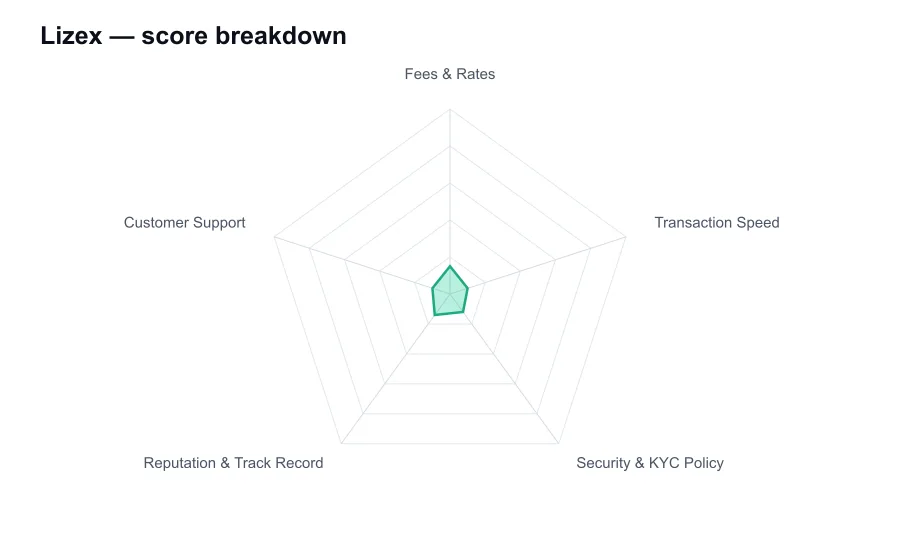
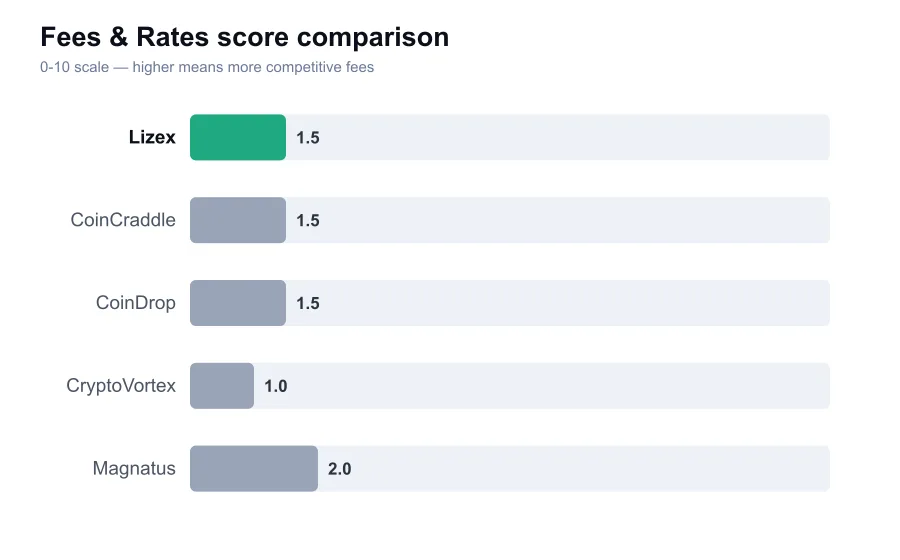
Fees are impossible to score generously when a current official fee schedule cannot be verified. A serious venue should publish maker and taker rates, deposit costs, withdrawal charges, minimum order sizes, and the treatment of inactive accounts. Without those details, a user cannot calculate the true cost of trading or compare it with Binance, Kraken, Coinbase Advanced, or even a smaller regional platform.
This opacity creates a more serious issue than merely paying a higher commission. Unclear fees often travel with unclear withdrawal procedures. A customer may learn about network charges, manual reviews, conversion spreads, or minimum withdrawal rules only after money has been deposited. That is unacceptable for an exchange. Transparent fees are basic operating hygiene, not a luxury feature.
Transaction speed is also unproven. In centralized trading, speed means more than a website showing a price chart. It includes matching-engine performance, deposit crediting times, blockchain confirmation rules, internal wallet operations, and how quickly withdrawals actually leave the platform. There is no credible current basis to claim that Lizex delivers competitive execution or reliable withdrawal processing.
That distinction matters because a dormant or poorly maintained exchange can accept a deposit while failing at the only moment that counts, the withdrawal. Even a perfectly fast trade interface is worthless if wallet infrastructure is paused, support is absent, or the operator cannot be reached. Readers should not confuse the existence of an old logo or exchange profile with evidence of present-day operational capacity.
Security information is especially thin. I could not establish a current, authoritative security page describing cold-storage practices, proof of reserves, external penetration testing, asset insurance, withdrawal address controls, or a bug bounty. The absence of public evidence does not prove an incident happened. It does mean there is no meaningful basis to give Lizex credit for standards that leading exchanges now document openly.
KYC policy is similarly unclear from dependable current material. That is not a privacy advantage. No-KYC access is useful only where a service is active, transparent, and technically credible. A vague identity policy can instead mean users have no idea whether a later withdrawal will trigger document requests, account restrictions, or a compliance review. A clear policy is far safer than a mystery.
Reputation is Lizex's weakest area. The brand has not built the public record expected from a surviving exchange. There is no widely recognized leadership team, routine operating updates, prominent regulatory record, or substantial body of recent independent user reporting that supports confidence. In crypto, reputation is built slowly through boring reliability. Lizex offers too little visible evidence of that reliability.
Compare that with established names. Kraken publishes security information and has a long operating history. Coinbase has public-company disclosures. Binance, despite its regulatory controversies, has a huge amount of public scrutiny and liquidity data. Even if someone dislikes each of those companies for valid reasons, they are visible enough to investigate. Lizex is not in that category.
Customer support cannot be treated as adequate merely because a contact page may have existed in the past. A deposit problem requires a current support route, documented response expectations, and a real operator behind the ticket. With Lizex, there is not enough reliable evidence to assess active support quality. That is itself a negative result, because support becomes essential exactly when funds are delayed or inaccessible.
I would be particularly cautious about any website, social-media account, or direct message using the Lizex name today. Dormant exchange brands can attract impersonators, cloned login pages, and recovery scams. A person who has an old Lizex account should not respond to unsolicited messages offering withdrawal assistance. Never send a new payment to unlock an old balance, pay a supposed tax, or activate a wallet.
For former users, the practical approach is documentation. Preserve transaction hashes, screenshots, old emails, account statements, and wallet addresses. If a website is reachable, do not upload new identity documents or send test deposits until its ownership and legitimacy are independently confirmed. A small test withdrawal is better than trusting a dashboard balance, but the safest choice is often not to engage at all.
Lizex receives low scores because the key facts needed for a fair exchange review cannot be verified to a modern standard. That is not a complaint about a feature set. It is a judgment about trust. A platform that cannot demonstrate current operations, published fees, security controls, and reachable support should not be used for new deposits. My advice is blunt: treat Lizex as a historical name, not a place to trade.